
 Talk about a wealth of material! I’m going to talk about John Rutter himself and his writing of our piece and then branch out into the meaning of the text in a couple of followup ones. I’d encourage you to follow the link at the end to some earlier material (including some words from the great man himself via Facebook) that I wrote when we sang the Gloria.
First, a little background about the British music scene at the time of the Gloria. While Rutter had published the Christmas carol “Shepherd’s Pipe Carol” (which the Chorale has sung, although it’s better known to us it as “On the Way to Bethlehem”) at the age of 18, he wasn’t very well known in the UK music world even as he produced a number of other Christmas carols. “Difficult though it is to believe today, back in the 1960s and 70s the UK’s musical establishment was so polarized by the latest contemporary fads and fancies that Rutter’s exceptional talent went largely unremarked.”
 I’ve done my usual going-far-afield process in trying to decipher this carol, and found that, as usual, Liberties Have Been Taken with the original text, this one from Catalonia. (That’s a region of Spain that speaks a dialect called Catalan; you may be aware that there’s a separatist movement there that seeks to have independence from Spain. The tune, by the way, is apparently Catalonian also, as I’ve seen no composer’s name anywhere.) To start off this post, then, here’s the original text and a quite literal translation:
 These two items show up all over the place in Christmas music. This verse from the modern carol “In the Silence” by Craig Courtney with words incorporating an Appalachian folk song is particularly pointed, as it includes the symbolism quite plainly:
 There are so many ideas packed into the texts of Lux Aeterna that it’s hard to know what to include. But since the main juxtaposition is that of light vs. darkness, I thought it would be interesting for my second essay on this masterpiece to look at other pairs of opposites before I regretfully move on to other pieces in our concert. (Next week: the deep inner meanings of “Zip-A-Dee-Doo-Dah.”)
 Well . . . that depends. Probably the best answer is that there’s only one: God Himself. The first creative act of God recorded in the Bible, in the book of Genesis, concerns light: “And God said, Let there be light: and there was light” (Gen. 1:3 KJV). When we get to the last chapter of the last book of the Christian New Testament we see the same idea: “And there shall be no night there; and they need no candle, neither light of the sun; for the Lord God giveth them light” (Rev. 22:5 KJV). All through the piece there are references to light that have clear origins. I don’t want to give so many that I wear out your patience, so here are just three (using the translations printed in our sheet music):
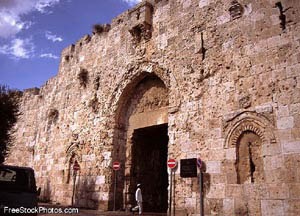 This piece repeats the phrase “bish’al han’ilah”–”as the gates begin to close.” So what are these gates?
 If you had been around in 1902 and invited to the coronation of Queen Victoria’s son Edward VII (“Bertie” to his friends), you would have heard the premier performance of Sir Hubert Parry’s setting of Psalm 122 from the Church of England’s Book of Common Prayer, always known by its opening words: “I Was Glad.”
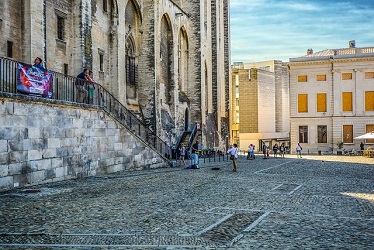 When I sang this piece with my own choir, I was intrigued by the title of this piece, as I associated Racine with Greek mythology. As a French minor in college I had read Racine’s play Phèdre, which has a story line about the hero Theseus, his second wife Phaedra, and his son from his first marriage, Hyppolite. I won’t go into the story here, but it sure doesn’t have anything to do with Christian theology!