Just Because Leroy Anderson’s “Sleigh Ride” Is Lightweight, Does That Mean He Was, Too?

Leroy Anderson composer Hey! Who says Leroy Anderson is “lightweight,” anyway? That is, “containing little serious matter”? Just because his music is accessible and fun, with clever sound effects, does that mean it’s not worth our time? Okay, enough with the questions, Let’s get to some answers.

So no, Leroy Anderson was most decidedly not lightweight in terms of his accomplishments. If I were just to list what he did during his life I’d probably take up my entire word limit, so here are some highlights:

Read more

Is the Word “Jingle” in “Jingle Bells” an Adjective or a Verb? And Other Ideas About This Famous (Not Necessarily Christmas) Song

For all you grammar geeks out there, the answer is “both,” depending on the line in the song. It’s quite clever wording. In the first line “jingle” is an adjective, then, in the second line the bells are told to jingle, so the word is now an imperative verb. Isn’t that cool?

Perhaps the first question to be asked is, “what’s a jingle bell?” I’ll let good old Wikipedia answer this:

Bells of this type were developed centuries ago for fastening to harnesses used with horses or teams of horses. Typically they were used for horse-drawn vehicles, such as carriages and sleighs. The bell was designed to make a jingly sound whenever the horse and thus the vehicle was in motion. The purpose was perhaps to herald the approach of someone important, or likely to warn pedestrians of the vehicle’s approach so that they might step aside to avoid collisions and potential injuries. This was especially important for sleighs, which otherwise make almost no sound as they travel over packed snow, and are difficult to stop quickly. This instrument was also used for fun by children in games and songs.

Read more

Was There Really Any Winter’s Snow at the Time of the Nativity in Bethlehem?

When you see the title of the English Christmas carol “See Amid the Winter’s Snow,” you have to ask yourself the question in the title of this post.

And the answer is: Probably not. Snow in Israel is very rare. I’m posting a picture below of a historic snowfall in Jerusalem in 2013. Normally, though, there are two seasons in this part of the world: the wet and the dry. If Jesus were indeed born in December, the weather could have been cold and wet but probably not snowy.

Read more

What’s a Mountain Got to Do with the Nativity? And Other Questions About “Go Tell It on the Mountain”

Image by Free-Photos from Pixabay

Mountains turn up all the time in the Bible. They can be places where God interacts with people, such as Mount Sinai where God gave the commandments to Moses to take back down to Israel, or where someone with “clean hands and a pure heart” can meet with Him, or where a chosen few disciples can see the transfiguration of Jesus. Or people can shout for joy from the mountaintops. And a mountain can also be simply a place from which to speak, with the most famous example being that of the Sermon on the Mount: “Now when Jesus saw the crowds, he went up on a mountainside and sat down. His disciples came to him, and he began to teach them.” (Matthew 5:1-2 NIV) Here’s this big crowd, and here’s a high place to sit which happens to be on a mountainside, so Jesus uses it.

Read more

What’s the “Story Behind the Song” for “The Awakening”?

Sometimes you don’t need to reinvent the wheel! Joseph M. Martin, the author of the lyrics and composer of the music for our selection “The Awakening” has written a definitive essay about the meaning of this piece, and there’s nothing more I need to say. With his kind permission I’m including a quotation here of his opening statement and then encourage you to follow the link and read the entire piece:

When I was asked to write the commissioned anthem for the 20th anniversary of TCDA (Texas Choral Directors Association), I knew that the piece would be sung first to music teachers and I wanted to encourage them in their work and remind them of how important they are to the lives of our young people.

The Story Behind the Song” by Joseph M. Martin

How Does One Selection on our Program, “Psalm 139,” Encapsulate a Whole Piece of Chorale History?

So, so interesting, folks! There are three components: the text, the composer, and the dedicatee.

First, the text, a psalm from the Jewish Bible/Christian Old Testament that celebrates God’s omniscience and omnipresence. I have been fascinated with the way the composer, Will Baily, used just a few lines from this psalm. Familiar as I am with the passage, I had never really thought about the specific meanings of some of the words. Working on the song has made me look a little more closely. For instance, what are the “wings of the morning”? Honestly, that question had never occurred to me before. Most commentators say that they’re the sunbeams that stream up from the horizon as the sun rises; indeed, a number of translations use the phrase “wings of the dawn.” Those wings are going to take the speaker to “the farthest sea” or, in many versions, “the uttermost parts of the sea.” There’s a rich visual here: the sun rises in the east; the sea (which for the ancient Israelites would be what we call the Mediterranean Sea) is to the west. So the imagery has the speaker flying, literally, at the speed of light from the east horizon at dawn as far west as the eye can see, but God is there before him. And if the speaker feels overwhelmed by the darkness, he can be reassured that it is no barrier for God. I was reminded of a phrase from the Christian New Testament: “God is light; in him there is no darkness at all.” (I John 1:5 NIV)

Read more

Is Candide Really Candid?


This is one of those posts in which I could go on and on and on. I could talk about the original novel Candide by the 18th-century French satirist Voltaire, or the character of Candide in the novel, or the musical in its many iterations overseen by Leonard Bernstein, from which our selection is taken. I’ll try to hit each of these areas just a little.

So, to answer my rather silly question in relation to the above: No. Candide is not candid, but Candide is. Little grammatical joke there.

Voltaire’s novel is not in the least candid; that is, it is not naïve, gullible, sincere, or innocent. We use the word today in a slightly different sense; if you say to someone, “I’m going to be candid with you,” you usually mean “I’m going to say something tactless to you.” But you can see how this idea derives from the original definition. If you’re very frank and open yourself you’ll tend to be that way with other people. The novel itself, however, is biting, bitter and sarcastic, full of truly awful events. Even for modern readers, steeped in horror movies and violent video games, it doesn’t make for pleasant reading. (I personally could barely get through the synopsis on Wikipedia.)

Read more

What three strands produced our selection “Friendship” by K. Lee Scott?

Image by Clker-Free-Vector-Images from Pixabay

Ecclesiastes 4:12 says, “A threefold cord is not quickly broken.” Certainly there are at least three cords, or strands, of friendship that have characterized the relationship of composer K. Lee Scott with the Cherry Creek Chorale and especially with one of its members, Ron Lester.

Ron has been a member of the chorale for over 15 years, first joining us because he was looking for variety and fun in the music being performed as well as a certain amount of flexibility in rehearsal attendance due to his work schedule. (I wonder what other chorales he looked at! Our rehearsal schedule is pretty demanding, to my mind at least.) He ended up serving on the board in various capacities and feeling such a part of the group that when he and his wife Ann started estate planning, he says, “We thought it would be a lot more fun to give a gift to the Chorale now and be a part of that gift.”

Read more

Who’s Sylvie, and Why Is She Carrying Water?

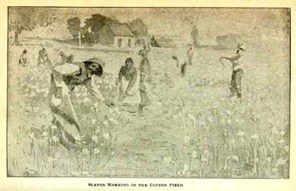
Slaves working in a cotton field. From Tupelo by John H. Aughey.

Well, Sylvie, or Silvy, or Silvie, may have been a real person, a slave woman on a plantation being implored by someone in the fields to bring him a drink. Or she may have been the aunt of the man who popularized the song. Let’s start with him, the great black folk and blues singer Huddie “Lead Belly” Ledbetter, who performed throughout the first half of the 20th century, making recordings, holding concerts, and hosting his own radio program for a brief time. He came to the attention of the father/son team of John and Alan Lomax, who traveled the South during the 1930’s recording folk music on “portable aluminum discs” for the Library of Congress. He also spent a fair amount of time in prison for various offenses, including a stabbing, and his nickname was apparently assigned to him there:

Read more

Does the song “Don’t Let the Rain Come Down” make any sense?

Ersel Hickey.jpg
Ersel Hickey, image accessed via Wikipedia.

This cheerful, seemingly simple song is far from simple and not even all that cheerful. I’ll have to admit up front here that my rabbit trails petered out before any definitive conclusions were reached. But here’s what I was able to come up with:

Let’s start out with the original nursery rhyme about a crooked man and his various crooked accoutrements:

There was a crooked man, and he walked a crooked mile,
(or, in some versions, he had a crooked smile,)
He found a crooked sixpence against a crooked stile;
He bought a crooked cat which caught a crooked mouse,
And they all lived together in a little crooked house.

Read more