
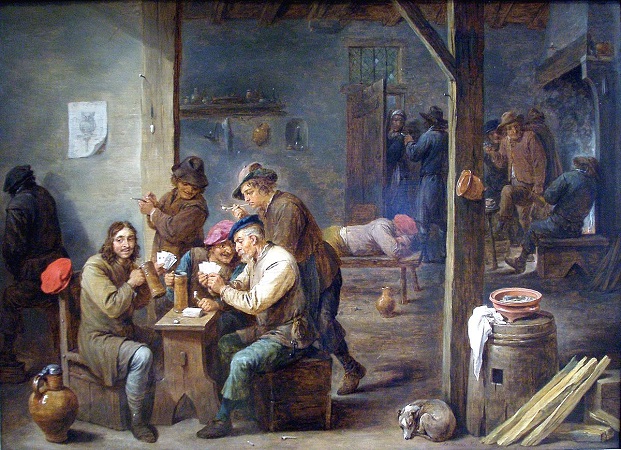
“In the Tavern” by David Teniers the Younger, 1610-1690, from The National Gallery of Art, public domain
One of the most popular concert choral works of the 20th century is Carmina Burana by Carl Orff. I’ve written a book about it, and I’d encourage you to take a look if your own group is involved in a performance. Below is a version of a chapter about one selection, “In Taberna,” which we’re including in an upcoming concert called “Harmony and Hops,” all about the joys of Germany and drinking, in whatever combination we can come up with.
This particular piece is part of a larger section of Carmina that is also titled “In Taberna.” In that section Orff includes some texts about the joys of drinking, gambling, and lust. It’s fair to say that it’s this section that has given Carmina as a whole its scandalous reputation of being sacrilegious, but in reality none of these pieces are directly about church institutions at all. That whole connection stems from the fact that the set of original medieval manuscripts from which the texts were taken happened to be found in a monastery. But even the piece “Ego sum Abbas/I Am the Abbot” isn’t about a real abbot at all but about an “abbot of the drinkers” who presides over a parodical “Drinkers’ Mass.” So don’t take any of this too seriously!
