The Great Tito Puente Writes Fewer than a Dozen Words—And Creates a Hit with “Oye Como Va”

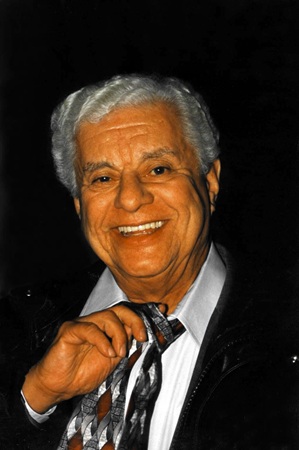
By Kingkongphoto & www.celebrity-photos.com from Laurel Maryland, USA – Tito Puentes, CC BY-SA 2.0, https://commons.wikimedia.org/w/index.php?curid=74769220; image accessed via Wikipedia.

I had no clear idea who Tito Puente was until I started researching his massive hit from the 1960s, “Oye Como Va.” Just reading his Wikipedia page was quite an experience. He grew up in New York City’s Spanish Harlem and drove the neighbors crazy when he was a boy because he was constantly pounding on pots and pans, so his mother signed him up for 25-cent piano lessons. And it only got better from there as his musical talents expanded into any number of instruments. He ended up serving in the US Navy during World War II on an aircraft carrier in the Pacific. A list of his duties as noted in Wikipedia included:

playing alto saxophone and clarinet in the ship’s big band as well as occasionally drum set, piano during mess hall, acting as the ship’s bugler, and serving as a machine gunner in the battles of Leyte and Midway. (And when did he learn to operate a machine gun? Not clear.)

This wartime experience led to two great influences on his later music career: he went on a tour of Asia, traveling for several months after the end of the war, and he attended Julliard on the G.I. bill, where he studied orchestration and conducting. (His conducting teacher there was Japanese, thus cementing those Asian influences from his travels.) From there he went on to a rich and varied career in music, becoming especially known for his playing of the timbales, a type of shallow metal drum. Because Puente was such an active and engaging performer he was usually put at the front of bands so that people could see the show he put on. (I can’t resist pointing out here that a timbale resembles an overturned flat-bottomed stew pot.) Eventually he started his own band and was a mainstay at the Palladium Ballroom during the 1950s and 60s. If you want to get more info about this remarkable man, follow this link below to his Wikipedia page.1 I, however, had better get on to the ostensible subject of this post, “Oye Como Va.”

Read more

How Do You Solve a Problem Like a Folk Song? Three Mexican Folk Songs with their Many Meanings

Image by Martin Mariano Hernandez Tena from Pixabay

I’ve written approximately one ton about how true folk music evolves and develops over time. Let me just summarize those ideas once more as I venture into the meanings of the three Mexican folk songs my own choir, the Cherry Creek Chorale, sang in October 2025 at our “Spells, Spirits & Mariachis” concert.

So, as you probably know already, a “true” folk song cannot be traced back to an original version since it wasn’t written down at its inception. Instead, it has been passed down orally for some time and has no known author. At some point, though, there’s always an attempt to preserve songs that have become popular. The results can be quite varied, since one transcriber may get different wording from that of someone else. And a folk song or tune doesn’t have to be ancient; the familiar song “Buffalo Gals” has a panoply of variations that may date back only to the 1830’s. (“Bowery Gals,” “Philadelphia Gals,” “Round Town Gals,” and even a song to that tune that addresses “Lubly Fan,” [“Lovely Fanny”] and was performed in a minstrel show.)

But I must pull myself back here and get on to my main subject, the song suite arranged by the prolific American composer and arranger David Conte. I can’t do his career justice here, so rather than shoehorn him in I’ll link to his website1 and you can take a look if you’re so inclined. I’ll just mention as an instance of his thoroughness that he’s written three sets of arrangements for these songs, one for SATB, one for SSA, and one for TTBB. Sweet!

Read more

Has the Chorale Gone Over to the Dark Side by Having a Halloween Concert?

Picture


Years ago a woman I knew said that she had become concerned that by celebrating Halloween she was advocating wickedness and evil, and she had decided to stop doing it. Apparently she had been into this holiday big time, with tons of decorations and traditions, probably up to and including cakes sporting spiders and fake cobwebs strewn everywhere. She threw it all out and explained to her kids that they would no longer be participating in any of these activities. She substituted a more innocuous “harvest” holiday, so they didn’t miss out entirely.
 

I’d be the last person to criticize this woman. She was totally sincere and believed that she was doing right by her family. And yet . . . in order to be perfectly consistent, she would have had to also eliminate Christmas and Easter celebrations from her household as well. Both of those Christian holidays have traditions with pagan roots.

Read more

A Medley from Tim Burton’s “Nightmare Before Christmas”

Picture
Medleys from musicals or films are a popular way for a choir to be able to give its audience a taste of the original without having to worry about staging the entire work. Listeners who are familiar with the source material will be given an opportunity to hear it in a different venue; listeners who aren’t familiar with it may be encouraged to seek it out. These opportunities also apply to the performers. For instance, I had never seen Guys and Dolls, but when my own choir performed a medley from that musical, I was inspired to watch the film. And the same thing happened to me with Nightmare. I have to say that it sounded pretty icky to me when we first got our music, but I decided to watch the movie anyway so that I’d have a good basis for this post. Guess what? I totally fell in love with it. So very, very creative!
 

Read more

The Inspiration for Sid Robinovitch’s “Canciones por las Americas”

Rainy night
Image from Pixabay; reference is to “Noche de Lluvia,” the first of the three songs in the “Canciones.”

One of the great pleasures of writing the posts on this site is that I’m sometimes able to get in touch with living composers and badger them with nosy questions. I was extremely curious about this set of songs because they all have Spanish texts, and yet Sid Robinovitch is Canadian, has a Jewish background, and wrote the pieces as a commission for the Association of Canadian Choral Conductors. There didn’t seem to be much of a Latin tango connection in any of this. So originally I professed my mystification and moved on, but later it occurred to me that I could just ask. I e-mailed Robinovitch after looking up his contact info on his website, and here is part of his very gracious and prompt reply:

Read more

Two Bittersweet Ballads Teamed Up in a Melancholy Medley

Source: Pixabay

Fall is my favorite time of year: I love the colors, the smells, and the crisp air. I remember so vividly how exciting it was for me as a kid to go shopping for school supplies with my mom. There was the pristine Big Chief tablet and new pencils. Maybe even an unsmudged pink eraser. Everything seemed possible.

But for some autumn is a sad season, as it starts the inevitable slide toward winter with its darkness and cold. Two songs with lyrics by Johnny Mercer portray this viewpoint: “Autumn Leaves” and “When October Goes.” They’ve been put together in a lovely medley by the modern composer/arranger Paul Langford, a true powerhouse whose arrangements I’ve sung myself. Both of these songs have a fascinating backstory.

Read more

How Do Toys Become Real? Reflections on Barbie, Pinocchio, and the Velveteen Rabbit, with perhaps a bit of a side trail about The Lord of the Rings

Image accessed via Wikipedia.

My choir, the Cherry Creek Chorale in the Denver area, performed Billie Eilish’s “What Was I Made For” from the movie Barbie in our May 2025 concert, California Dreamin’. The scene in which Barbie meets her creator, Ruth Handler (played by the great Rhea Perlman), and decides to leave Barbieland and live in the real world gets me misty-eyed every time I watch it.

(Side rant: Just because I choke up at the above scene doesn’t mean that I approve of everything in this movie, especially the portrayal of men. Honestly, folks: If there were ever to be a movie titled Ken, and women without men were to be portrayed the same way that men without women are shown in Barbie, there would be rioting in the streets—and the rioters wouldn’t be wearing pink pussy hats but Brunnhilde horned helmets, and they’d be carrying spears to boot! End of rant.)

Ho-kay. Where were we? Ah yes—Barbie’s decision to become “real.” Suddenly I realized that this is the same story as that of Pinocchio and also of the Velveteen Rabbit1, both about toys who become living creatures. Since the Chorale has sung a number from the Disney Pinocchio movie I’ve written a post about that story, which I’d encourage you to read. Pinocchio has to prove that he’s worthy of becoming a real boy by being “brave, truthful, and unselfish.” Becoming real is all upside for him once he rescues Geppetto from the whale, but it’s a different story for Barbie. Here’s the dialogue that comes right before the song, in which Barbie talks to Ruth Handler. I went to the trouble of transcribing it because I wanted to be sure that the meaning came through. I’ll post a video of the movie clip at the end of this post:

Read more

Two Views of Love in Two Musical Comedies

Picture

If my choir is performing a song from a film or play I always like to put the piece in context, which often means that I have to wade through summaries of plots that make very little sense. Many if not most musical comedies have plots that are simply frameworks, often flimsy, to hang the song-and-dance numbers on. (It’s okay for me to end that previous sentence with a proposition since one of these song titles does that, too.) Also, sometimes the musical numbers have outlived the production for which they were written and it’s very difficult to get access to the original story.

Read more

In which I get schooled on the greatness of Dave Brubeck and his “Take Five”

The quartet in 1959 during the Time Out sessions. From left to right: Joe Morello, Paul Desmond, Dave Brubeck, Eugene Wright. Accessed via Wikipedia. Fair use, https://en.wikipedia.org/w/index.php?curid=5988905

My brother-in-law really likes jazz, and I’ve sometimes said in his hearing that I don’t particularly care for it as it seems formless, repetitive and tuneless to me. This comment has been received about as well as you’d expect.

Ho-kay. Brubeck’s origin story is truly fascinating, so let me take at least a dip into that before moving on to the piece at hand. Brubeck did the piano-lessons-at-age-four routine, but his family moved to a 45,000-acre ranch in California when Dave was 12 and he got roped into working there. His two older brothers were on track to become professional musicians due to his mother’s influence and training; his cattleman father insisted to his wife that “’this one is mine,” referring to Dave. Thus Brubeck moved from the piano bench to the saddle, but music still fascinated him:

Read more

Streams of Meaning in Shawn Kirchner’s “Sweet Rivers”

Jordan River near Chorazin (Seetheholyland.net)

 Have to tell you that I’ve just finished doing a deep dive into the career of the composer/songwriter of “Sweet Rivers,” Shawn Kirchner, and I am exhausted. You can read his professional bio on his website1 if you’d like; just be sure you’re sitting down before you start.

Although Kirchner was classically trained, his compositions have become more and more attuned to popular music, whether folk, jazz, or bluegrass. Within those categories he’s written many sacred pieces, one of which is “Sweet Rivers,” pairing text by the itinerant preacher John Adam Granade with his own tune. Granade was an active participant in the “Great Revival in the West” that’s usually dated to 1800 and is part of the “Second Great Awakening” that swept over the Northeast and Midwest US especially, although outbreaks of religious fervor occurred all over the nation. Granade was known as “the wild man of Goose Creek” (a settlement in Tennessee) and became a prolific hymnwriter. Here’s a description of his behavior:

Read more