
Podcast: Play in new window | Download
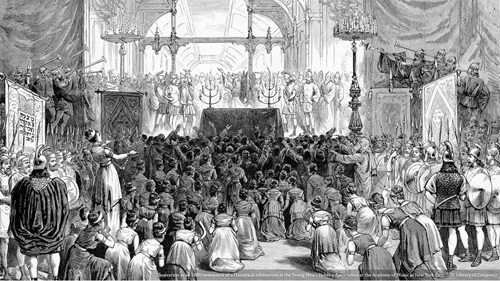
Whew. I had no idea that the story of Hanukkah was so complicated. My previous posts about this Jewish holiday have for the most part focused on the eight days that the menorah in the Temple at Jerusalem burned from a flask of oil that should have lasted only one day, with the ensuing symbolism of lights and candles, feasting and celebration. (Latkes, anyone?) But the actual Hebrew prayers, including “Al Hanissim”1 recited as part of the celebrations, say nothing about the miracle of the long-lasting oil. Why is that, and when did the oil miracle become part of the story? I will say up front that there are no completely definitive answers to be found here. It’s been fascinating, though, to dig through quite a few sources and see how the subject is handled. Here’s an overview about the holiday as a whole and also what I’ve found out about this particular prayer.2

 I’ve written quite a bit about Hanukkah in previous posts, specifically about the significance of
 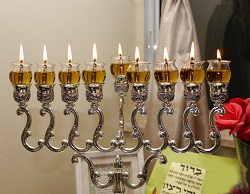 First question: Why is the pictured lamp stand more authentic and correct as a part of the Hanukkah celebration than the usual candelabra?
 Talk about a leading question! The answer is a resounding “yes.” There’s so much to be said about this supposedly simple song that I just don’t know where to begin.
 What’s distinctive about Ron Jeffers is that he’s a living composer who has produced a significant amount of original music and arrangements, all for sale as sheet music from various outlets including his own company, Earthsongs, and whose music is performed quite frequently if YouTube is anything to go by, and yet . . . he has no online presence whatsoever. No personal website. No blog, No (worst of all) Wikipedia entry! How is this possible? In fact, if I hadn’t looked under “Ronald Jeffers” instead of either “Ron Jeffers” or “Ronald Harrison Jeffers,” I wouldn’t have gotten much information beyond his date and place of birth and a list of his publications.