
 This is another one of those endlessly variable folk songs with about a hundred verses. You might ask, though, “Okay, but who’s the ‘she’ who’s comin’ round the mountain?” Good question. I originally made an assumption here, thinking that this was a literal woman, but she’s not that in the original at all. Guess what ‘she’ actually is? A chariot. That’s right. This song is drawn from a spiritual about the Second Coming of Christ, and the “she” refers to the chariot that “King Jesus” will be riding. As with many spirituals, though, there may be an underlying meaning about freedom and the Underground Railroad.
Folk songs
Why Is Henry VIII Associated with the Song “Greensleeves,” and Does the Song Have Anything to Do with Sleeves on a Dress? Etc.

I am constantly, I mean constantly, realizing that some piece of music I’ve heard all my life is full of unanswered questions. So, honestly, I had never asked myself, ‘Is someone actually wearing green sleeves in “Greensleeves”?’ When I saw this piece on the list for a concert by my own choir, however, I realized that I knew very little about it even though I’ve heard it all my life. The tune is also used for “What Child Is This?” and for one of the songs in the movie How the West Was Won, “I’ll Build You a Home in the Meadow.” So what’s what here?
Let’s start with the whole reason that this piece is seen as having some connection to royalty: the idea that King Henry VIII of England wrote it for the woman he loved, Anne Boleyn, who became his second wife and ultimately lost her head. Alas, my friends. That little idea seems to be a total myth, although it makes a good story. The first public appearance of the song was as a “broadside ballad” in 1580, but Henry had died in 1547, and his pursuit of Anne Boleyn had taken place well before that, in the mid-1520’s. Could he have written the song then, with its only being ublished over 50 years later? Well, of course he could have. Anything could have happened with this song, really. But is there any actual evidence of Henry’s authorship? Not a jot. There’s one glancing reference in another song using the same tune to “King Harries time,” and that’s it.
Why is there such a swing from merriment to tragedy throughout “Letters from Ireland”?

I just sat down and went through the entire Letters from Ireland book with its arrangements of Irish folk songs by Mark Brymer interspersed with texts, mostly taken from letters written in the relevant historical period. Some are what you’d call “rollicking;” others are very somber, with perhaps “Skibbereen” being the most tragic. So what’s going on here? I’m going to give some general ideas here, and if you find them interesting I’d encourage you to head on over to the page of this website where you can purchase my book that includes a chapter on each of the selections in this fabulous work.
To begin with, let me give you a couple of astoundingly obvious observations:
Who’s Sylvie, and Why Is She Carrying Water?
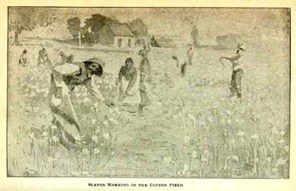
Well, Sylvie, or Silvy, or Silvie, may have been a real person, a slave woman on a plantation being implored by someone in the fields to bring him a drink. Or she may have been the aunt of the man who popularized the song. Let’s start with him, the great black folk and blues singer Huddie “Lead Belly” Ledbetter, who performed throughout the first half of the 20th century, making recordings, holding concerts, and hosting his own radio program for a brief time. He came to the attention of the father/son team of John and Alan Lomax, who traveled the South during the 1930’s recording folk music on “portable aluminum discs” for the Library of Congress. He also spent a fair amount of time in prison for various offenses, including a stabbing, and his nickname was apparently assigned to him there:
Does the song “Don’t Let the Rain Come Down” make any sense?

This cheerful, seemingly simple song is far from simple and not even all that cheerful. I’ll have to admit up front here that my rabbit trails petered out before any definitive conclusions were reached. But here’s what I was able to come up with:
Let’s start out with the original nursery rhyme about a crooked man and his various crooked accoutrements:
There was a crooked man, and he walked a crooked mile,
(or, in some versions, he had a crooked smile,)
(or, in some versions, he had a crooked smile,)
He found a crooked sixpence against a crooked stile;
He bought a crooked cat which caught a crooked mouse,
And they all lived together in a little crooked house.
What Are the Main Water Images in “Wade in de Water”?

Black spirituals are true folk songs that were passed down by word of mouth over many years, with various versions being developed, before they were eventually written down. The texts reflect this variety, as there’s no one “official” version. The arrangement I’m using as a reference for the spiritual “Wade in de Water” has stripped-down lyrics, so that’s what I’m using as the for this commentary. Even with the limited text used, though, there’s still a lot to say! (Betcha you couldn’t have guessed that one.) Bear in mind that a lot of commentary on any type of folk song is at least partly supposition and hypothesizing, as we don’t have access to the authors. We don’t even know their names.
What’s the Meaning of All the Non-Christmas-y Imagery in “Cold December Flies Away”?
 I’ve done my usual going-far-afield process in trying to decipher this carol, and found that, as usual, Liberties Have Been Taken with the original text, this one from Catalonia. (That’s a region of Spain that speaks a dialect called Catalan; you may be aware that there’s a separatist movement there that seeks to have independence from Spain. The tune, by the way, is apparently Catalonian also, as I’ve seen no composer’s name anywhere.) To start off this post, then, here’s the original text and a quite literal translation:
What’s the Historical Background of “Zip-A-Dee-Doo-Dah”?
 As I often say when writing these posts: Hoo boy. There ended up being lots to say about this supposedly simple song. My purpose in writing this post, as with all that I do, is to deepen your understanding of what you’re singing (or hearing, if you’re reading this post as an audience member). Along with the lighthearted words and fun arrangement of this piece there’s a darker background arising from its source material, both immediate and historical.
So let’s see—where to begin? I guess with the fact that “Zip” won the Oscar for Best Original Song in 1947; it had been performed in the 1946 Disney film Song of the South by James Haskett, a black actor who played the part of Uncle Remus. This movie is intriguing for a couple of reasons: 1) it mixes animation and live action, and 2) Disney has never released it in its entirety in the US on tape or digitally. I’m sure there are pirated versions out there, especially since the film was “re-released” several times. (You can watch the film in segments on YouTube.) And why has Disney kept this item in the vault? Here’s a good explanation:
Thoughts on Gail Kubik (not a girl) and Polly-Wolly-Doodle (also not a girl).
 When my choir the Cherry Creek Chorale sang an arrangement of “Polly Wolly Doodle” by someone named Gail Kubik. I assumed that “Gail” indicated a woman. But Gail is a guy, and he lived in the 20th century, He wrote three operas, several violin concertos, and a number of film scores, including one for the Dr. Seuss animated film “Gerald McBoing Boing” for which he won an Oscar in 1951. But he didn’t rest on his laurels, no sir-ee. In 1952 he won the Pulitzer Prize in music for his “Sinfonia Concertante.” He kept busy throughout his life with teaching and commissions. “Polly” was commissioned by the Robert Shaw Chorale during the 1950’s. Kubik entered into the playful tone of the song, as you’ll be able to see if you watch the performance video at the bottom of this post.
What’s the Real Story Behind “Grimsby Town”?
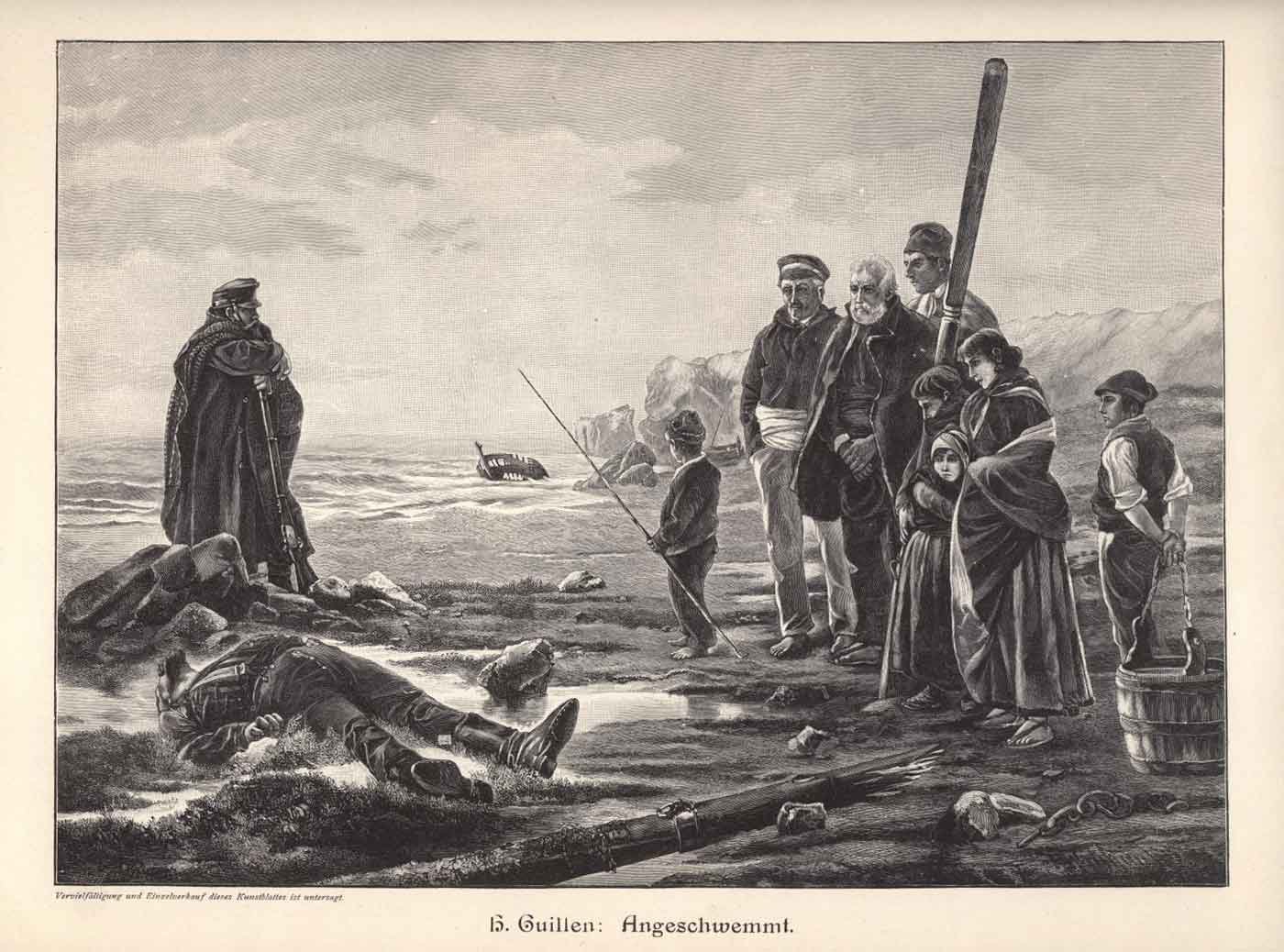
The short answer that this folk song describes an actual event that took place on February 8 and 9, 1889. That being said, there’s an almost endless array of discussion/argument about its wording. To give you just a taste of this backing and forthing, there are whole threads on discussion forums talking about why the song says “from Yarmouth down to Scarborough” when Scarborough is clearly north of Yarmouth. (Don’t believe me? Here’s the link to Google maps.) Since I’m no sailor, I can’t pretend to understand the reasoning as to why this wording is perfectly accurate in nautical terms, but it has something to do with the direction of the winds and currents. I think. And that’s just one small point in the whole mix. If you’re of a mind to do some reading yourself, google “Grimsby Town fishing disaster” and you’ll have more than enough to keep you busy. (Don’t just google “Grimsby Town” on its own, as all you’ll get is stuff about their football club—soccer to us ignorant Americans. Very interesting in its way, of course, but not much to our point here.)