Aaron Copland Does More than Required for his Old American Songs

Copland, the Commission, and the Composition
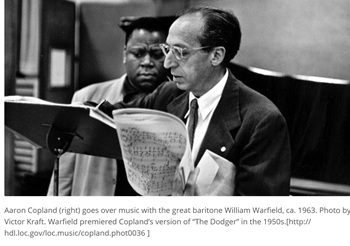
Once again I’m on the hunt for the origins of a famous piece of music. Aaron Copland’s suite of early American tunes was commissioned by none other than Benjamin Britten and was presented at that composer’s newly-launched Aldeburgh Festival in 1950. Britten had developed a keen interest in performing American folk music, at least partly because of his long visit to the US from 1939-1942. While there he and his partner Peter Pears had spent a lot of time with Copland; he said later that Copland was “by far the best American composer.” Perhaps because of Pears’ abilities as a singer, he and Britten regretted the dearth of songs in the Copland catalog. So they decided to do something about that, and in 1950 commissioned a set of American folk songs to be performed at the Festival. Well! Copland dove into this commission head first, only coming up for air after he’d ransacked the sheet-music archives at Brown University for material. He did an enormous amount of work for what turned out to be a set of pieces that together total less than 13 minutes’ worth of performance time. But this wouldn’t be the first time Copland got completely caught up in writing music that he didn’t think would result in much return on his investment; he said about  the ballet music for Appalachian Spring, “It took me about a year to finish and I remember thinking how crazy it was to spend all that time because I knew how short‑lived most ballet scores are, but [it] took on a life of its own.”1

Read more

The Deeper Meaning behind Copland’s “Ching-A-Ring-Chaw”

PictureNote: This post was written about an earlier concert of the Cherry Creek Chorale in which we sang Part 2 of Copland’s “Old American Songs.” We will be performing the songs from Part 1 for our upcoming concert on March 6 & 7 2026. But there’s so much interesting background on Copland in general below that I wanted to go ahead and post it again.
Sometimes I start researching these posts thinking that I know what’s what and I just need to fill in a few blanks, only find out that my ideas have been completely wrongheaded. Other times I think there’s not too much to say and end up with enough material for a doctoral dissertation. This post fulfills both conditions. Racism and the transformative power of art are all packed into this one short selection.

Read more

The Great Tito Puente Writes Fewer than a Dozen Words—And Creates a Hit with “Oye Como Va”

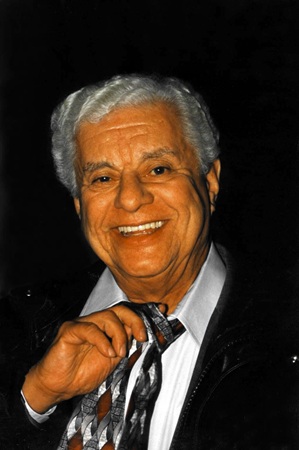
By Kingkongphoto & www.celebrity-photos.com from Laurel Maryland, USA – Tito Puentes, CC BY-SA 2.0, https://commons.wikimedia.org/w/index.php?curid=74769220; image accessed via Wikipedia.

I had no clear idea who Tito Puente was until I started researching his massive hit from the 1960s, “Oye Como Va.” Just reading his Wikipedia page was quite an experience. He grew up in New York City’s Spanish Harlem and drove the neighbors crazy when he was a boy because he was constantly pounding on pots and pans, so his mother signed him up for 25-cent piano lessons. And it only got better from there as his musical talents expanded into any number of instruments. He ended up serving in the US Navy during World War II on an aircraft carrier in the Pacific. A list of his duties as noted in Wikipedia included:

playing alto saxophone and clarinet in the ship’s big band as well as occasionally drum set, piano during mess hall, acting as the ship’s bugler, and serving as a machine gunner in the battles of Leyte and Midway. (And when did he learn to operate a machine gun? Not clear.)

This wartime experience led to two great influences on his later music career: he went on a tour of Asia, traveling for several months after the end of the war, and he attended Julliard on the G.I. bill, where he studied orchestration and conducting. (His conducting teacher there was Japanese, thus cementing those Asian influences from his travels.) From there he went on to a rich and varied career in music, becoming especially known for his playing of the timbales, a type of shallow metal drum. Because Puente was such an active and engaging performer he was usually put at the front of bands so that people could see the show he put on. (I can’t resist pointing out here that a timbale resembles an overturned flat-bottomed stew pot.) Eventually he started his own band and was a mainstay at the Palladium Ballroom during the 1950s and 60s. If you want to get more info about this remarkable man, follow this link below to his Wikipedia page.1 I, however, had better get on to the ostensible subject of this post, “Oye Como Va.”

Read more

How Do You Solve a Problem Like a Folk Song? Three Mexican Folk Songs with their Many Meanings

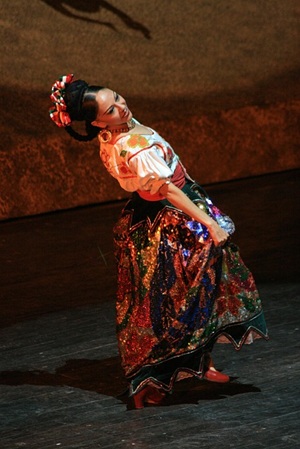
Image by Martin Mariano Hernandez Tena from Pixabay

I’ve written approximately one ton about how true folk music evolves and develops over time. Let me just summarize those ideas once more as I venture into the meanings of the three Mexican folk songs my own choir, the Cherry Creek Chorale, sang in October 2025 at our “Spells, Spirits & Mariachis” concert.

So, as you probably know already, a “true” folk song cannot be traced back to an original version since it wasn’t written down at its inception. Instead, it has been passed down orally for some time and has no known author. At some point, though, there’s always an attempt to preserve songs that have become popular. The results can be quite varied, since one transcriber may get different wording from that of someone else. And a folk song or tune doesn’t have to be ancient; the familiar song “Buffalo Gals” has a panoply of variations that may date back only to the 1830’s. (“Bowery Gals,” “Philadelphia Gals,” “Round Town Gals,” and even a song to that tune that addresses “Lubly Fan,” [“Lovely Fanny”] and was performed in a minstrel show.)

But I must pull myself back here and get on to my main subject, the song suite arranged by the prolific American composer and arranger David Conte. I can’t do his career justice here, so rather than shoehorn him in I’ll link to his website1 and you can take a look if you’re so inclined. I’ll just mention as an instance of his thoroughness that he’s written three sets of arrangements for these songs, one for SATB, one for SSA, and one for TTBB. Sweet!

Read more

A Deceptively-Simple Love Song: “Shule Aroon” or “Siúil a Rúin”

Image credit PetraSolajova via Pixabay

Sources are unanimous in saying that the origins of this Irish folk song are “somewhat unclear.” Since its theme is so universal (a woman left behind as her sweetheart goes to war), you could say that the exact historical reference doesn’t really matter all that much, but it’s always interesting to dig into such things (if you’re a history nerd like me). The most common theory about the song’s background says that it refers to the time of the British Glorious Revolution in 1688, when James II of England, a Roman Catholic, was deposed and replaced by William of Orange,1 a Protestant, and his wife Mary, the daughter of James by a previous marriage and also a Protestant. (If you want a fuller overview of this turbulent time, see my post about the song “Loch Lomond.”)

The Irish were solidly on the side of Catholicism, joining in with James II’s heirs in various attempts to wrest the throne from the wicked William’s hands. (That’s how they saw him, anyway.) But it was all in vain. By 1691, three years after William’s ascension to the English throne, the so-called Williamite War in Ireland was ended with the Treaty of Limerick (a town in Ireland).2 Although there were assurances of safety for Irish soldiers who remained at home, many of these men chose to go to France for military service there. (They were pretty savvy to leave, as the promises to those who stayed weren’t kept.) After all, if your profession is that of a soldier, and you’re forbidden to fight in your homeland, why not go somewhere you can? Louis XIV of France really wanted Irish soldiers to help him in his war against the Dutch, and William III was Dutch. So these exiled Irish soldiers could console themselves with the thought that they were continuing to fight the good fight. This exodus of Irish soldiers to France is called “the flight of the wild geese.” About 20,000 Irish in total fled Ireland, including about 6,000 women.

Read more

An Irish folk song with hazy roots and several meanings–“Oró, sé do bheatha abhaile”

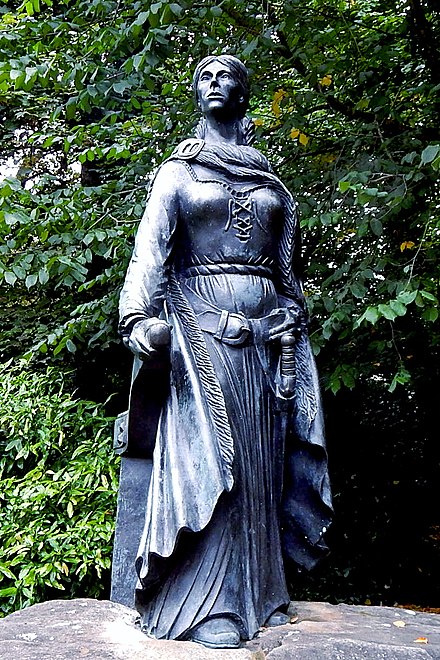
Grainne Mhaol Ni Mhaille statue, Westport House, in Westport, County Mayo, accessed via Wikipedia

Oh man! Have I chased down a number of rabbit trails about this seemingly-simple song.

Here’s what seems to have happened: The inestimable Wikipedia says, “Similarly to many folk songs, the origins of this song are obscure.” To put it mildly! However, it seems to be the case that sometime in early Irish/Celtic history (and who knows what time period this actually was) a tradition developed of “hauling the bride home,” which took place a month after the original wedding and consisted of the new bride’s being “hauled” to her now-husband’s house. It isn’t clear to me where she’d stay for that month–at her father’s house, one would guess, but who knows? It’s important to note that the original folk song (if there is indeed such a thing) consisted only of the chorus.

Anyway, here’s how (we think) it went, again from Wikipedia:

The “Hauling home” was bringing home the bride to her husband’s house after marriage. It was usually a month or so after the wedding, and was celebrated as an occasion next only in importance to the wedding itself. The bridegroom brought home his bride at the head of a triumphal procession—all on cars or on horseback. I well remember one where the bride rode on a pillion behind her husband. As they enter the house the bridegroom is supposed to speak or sing:
Oro, welcome home, I would rather have you than a hundred milch cows:
Oro, welcome home, ’tis you are happy with prosperity [in store for you].”
The piper, seated outside the house at the arrival of the party, playing hard [i.e. with great spirit]: nearly all who were at the wedding a month previous being in the procession. Oh, for the good old times!

Read more

“A Parting Glass” Is Offered to Those Who Stay Behind


Picture

There are many versions of this song, with varying words and melodies. I’ve tried to distill the various ideas down into something digestible, always keeping in mind that it’s a folk song and its origins are therefore murky. The initial inspiration may have come from a farewell letter written by Scotsman Thomas Armstrong on the eve of his execution in 1605 for border raiding. Here’s what he wrote:

This night is my departing night, For here nae langer must I stay;
There’s neither friend nor foe o’ mine, But wishes me away.
What I have done thro’ lack of wit, I never, never, can recall;
I hope ye’re a’ my friends as yet; Goodnight and joy be with you all!

Read more

Hard drinking and highway robbery—Whiskey & the Wild Rover


IImage by JamesDeMers from Pixabay

Several years ago, my own choir, the Cherry Creek Chorale, performed the suite Letters from Ireland, with arrangements of folk songs and also excerpts from letters. all put together by the contemporary composer/arranger Mark Brymer. I was so taken with the music that I wrote a companion book covering historical and literary information for the pieces. It’s available on this website and also from Amazon.

For our upcoming Celtic concert in March 2025 we’re singing just one arrangement from the suite, so I’ve extracted that material and am providing it for free on the blog. I’d encourage you, if your choir is singing the entire work, that you get the book.

For one section, Brymer combines two songs, “The Wild Rover” and “Whiskey in the Jar.” Here’s what I had to say about these two songs:

Read more

Is It Better to Take the High Road or the Low Road?

View of loch lomond
View of Loch Lomond; Image accessed via Wikimedia Commons

They’re both sad, but for one road the person is dead and for the other the person is grieved/bereaved. Which is which depends on the interpretation of the song you prefer.

Let me start by warning you that the history behind this innocuous-sounding song is right in my wheelhouse, or up my alley, or whatever expression you want to use. I’ll try to rein myself in, but it’s going to be hard. So hang in there with me to find out more than you thought possible about a song you’ve probably heard many times but never questioned. Let me just quote the chorus before we get started:

O you take the high road, and I’ll take the low road,
And I’ll be in Scotland afore ye,
But me and me true love will never meet again,
On the bonnie, bonnie banks of Loch Lomond.

 The person who takes the low road is going to get to Scotland first but won’t ever see his or her true love again. So who’s speaking, and what’s going on?

Read more

What Shall We Give? A Christmas Question

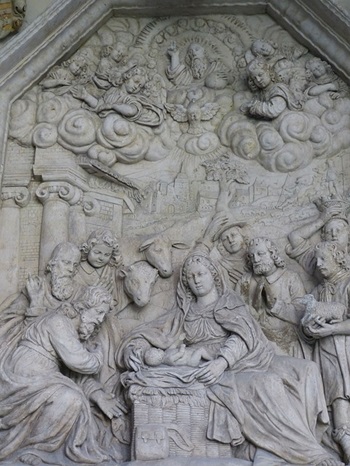
Image accessed via Pixabay

There’s a whole category of Christmas songs/carols that concern the bringing of gifts to the Christ child in Bethlehem. My own choir, the Cherry Creek Chorale, is singing a less-familiar one, “Son of Maria,” but more accurately “Son of the Mother” (“El Noi de la Mare“), which is also sometimes titled “Carol of the Gifts.” It is labeled as a traditional piece from Catalonia, a region of Spain that has seen its fair share of conflict over its periodic attempts to become an independent nation. I was surprised to see the number of carols (14) listed on Wikipedia as having come from this region; we are also singing the “Carol of the Birds,” which I plan to write about later on this blog. Because this is a traditional folk song, there is no “original” version. Instead, the song would have been passed down orally for generations and then finally written down, but these written lyrics vary immensely. Here’s a simple version used in a medley by the great Karl Jenkins; since it’s not being used as a stand-alone piece it needed to be fairly short. I’ll share some additional wording later in this post.

Son of Maria, Son of Maria.
What shall we give to the Son of Maria?
What can we give him that he will enjoy?
Bunches of grapes we will give to the infant,
baskets of figs for the beautiful boy.

Son of Maria.
What can we give to the Son of Maria?
What can we give to the beautiful boy?
Olives and walnuts and raisins and honey,
cherries and figs and some dates to enjoy.

Son of Maria.
Tampatam tam if the figs will not ripen,
what shall we do if the figs are still green?
Tampatam tam when our sins are forgiven,
Lovely ripe figs will at Easter be seen.
Tampatam tam when our sins are forgiven,
lovely ripe figs will at Easter be seen.

The sheet music says “English words by Carol Barratt after a translation from the Spanish”
Barratt is Karl Jenkins’ wife and a music educator in her own right.

Read more