What’s the Historical Background of “Zip-A-Dee-Doo-Dah”?

Song of south poster.jpgAs I often say when writing these posts: Hoo boy. There ended up being lots to say about this supposedly simple song. My purpose in writing this post, as with all that I do, is to deepen your understanding of what you’re singing (or hearing, if you’re reading this post as an audience member). Along with the lighthearted words and fun arrangement of this piece there’s a darker background arising from its source material, both immediate and historical.

So let’s see—where to begin? I guess with the fact that “Zip” won the Oscar for Best Original Song in 1947; it had been performed in the 1946 Disney film Song of the South by James Haskett, a black actor who played the part of Uncle Remus. This movie is intriguing for a couple of reasons: 1) it mixes animation and live action, and 2) Disney has never released it in its entirety in the US on tape or digitally. I’m sure there are pirated versions out there, especially since the film was “re-released” several times. (You can watch the film in segments on YouTube.) And why has Disney kept this item in the vault? Here’s a good explanation:

Read more

In which I follow the quest to find out the origin of “The Quest”

I’m always interested in the origins of things: the why. So for the selection “The Impossible Dream” (titled “The Quest” in the actual script) from Man of La Mancha that I’ve sung with my own choir I wanted to know why on earth a popular Broadway show had been made from a 400-year-old, 700-page novel, Miguel de Cervantes’ Don Quixote. Doesn’t sound all that likely, does it? And yet it happened. (There are lots of other unlikely origins for Broadway musicals, though—Kiss Me, Kate is based on Shakespeare’s The Taming of the Shrew.)
Read more

What’s the Origin of the Phrase “Pennies from Heaven”?

Picturephoto credit: Wikipedia

You wouldn’t believe the highways and byways I’ve traversed trying to get the full scoop on this one little phrase. I started out by googling, as usual. Of course the movie by that name came up—I’ll get to that in a minute. For the phrase itself, there was a lot about angels dropping coins from Heaven as a way of showing support and sympathy. Or departed loved ones doing so. Or both. It was a little confusing. The Oxford English Dictionary entry said: “pennies from heaven: money acquired without effort or risk; unexpected benefits, esp. financial ones.” It said that the phrase’s first use, at least in a printed source, was from something called Ghetto Messenger by A. Burstein, published in 1928. Well, I thought, that’s easy. I’ll just look it up on Google Books. Alas, they didn’t have the entire story but just part of the page with the phrase. There seemed to be a group of little boys involved, so I assumed that they were messenger boys, probably African-American, living in an inner city. I found the book in my library system and put it on hold, finally got it last week, and found out that my assumptions were pretty much wrong.

Read more

A Supposed Wardrobe Malfunction in “Cheek to Cheek”

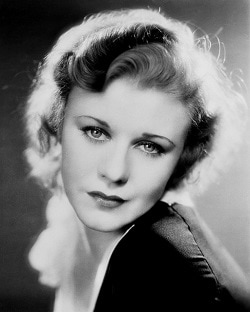
PictureSomewhere in my magpie mind I had a memory of a story about the dress that Ginger Rogers wore during the famous dance sequence of “Cheek to Cheek” in the movie Top Hat. All I could remember was that something had happened with the feathers coming off the dress and that Fred Astaire’s wife, who had trouble saying her r’s, had said, “Fwed will be so embawassed.”

Well, there are two versions of the story. The first one with the commentary from Astaire’s wife Phyllis says that the dress was covered with red feathers and that Phyllis, who had come to the set with David Niven to watch the filming and who was a little jealous of Rogers, said “She looks like a wooster.”

Read more

Why on earth is the Chorale singing the theme from the 1964 James Bond movie “Goldfinger”? 

Picture
photo from Wikipedia

Well, I can’t say that I have any special insight into the sensibilities of the artistic committee; all I can do is repeat the words of our conductor: “Well, this is a Welsh concert, and Shirley Bassey is Welsh, so . . . “

I could go several directions in this post. One possibility is to give you the plot of the movie, but I’ve read a couple of versions and find them all pretty much incomprehensible. Another is to take you line by line through the lyrics of the song, but even my obsessive English-teacher tendencies don’t stretch that far. So we’re left with a third subject, actually the most intriguing: Shirley Bassey herself. Her life in and of itself could be made into a very interesting film.

Read more

Is There Any Truth at all to the Story of the “Phantom of the Opera”?

Phantom of the Opera Mask

It’s always fascinating to search for the inspiration of a creative work, and that’s certainly true of The Phantom of the Opera. I tried to read the original 1909 novel by Gaston Leroux after seeing a performance of the musical some years ago, but I found it to be pretty much impenetrable. (And I just took a look at it again before writing this post; it hasn’t changed.) To me there were two questions I wanted to answer: 1) What is the reason for the Phantom’s physical disfigurement? And 2) What so-called “real events” gave rise to the legend of the Phantom in the first place?

There doesn’t seem to be any reason given for the Phantom’s horrible face in the original novel, which describes it as a “noseless, lipless, sunken-eyed face which resembles a skull dried up by the centuries, covered in yellowed dead flesh.” It is simply the way the child, christened Erik, was born. The epilogue of the novel gives a brief synopsis of Erik’s early life, saying that his own mother couldn’t stand the sight of him and he therefore ran away from home as soon as he could, with the intriguing tidbit that his father (who died before the Phantom’s birth) was a master builder. While I couldn’t get into the original version by Leroux, I found the1990 novel Phantom by Susan Kay to be utterly compelling. If you’d like to read a re-telling of the Phantom story told with great empathy from several points of view I’d recommend this book. Kay adds some intriguing twists to the story at the end, but I won’t tell you what they are! In a couple of film versions there are specific reasons given for the deformity: an acid attack and an accident with a record presser. (That second one is set within the cutthroat world of the early music industry.)

Read more

What’s the meaning of the weird ingredients in “Double Trouble”?

PictureThis selection is from the third film in the Harry Potter franchise, HP and the Prisoner of Azkaban. It’s performed by the Frog Choir, a group of Hogwarts students who don’t appear in any of the actual books but whom J. K. Rowling really loved when she saw them in the movie. They perform at the welcoming feast that begins the new school term and each carries a toad, one of which croaks during the song. (Why aren’t they called the Toad Choir? I don’t know.) The music is, of course, by John Williams. Isn’t everything?

Read more

Who Says, “Play It Again, Sam” in the Movie “Casablanca”?

Black-and-white film screenshot of a man and woman as seen from the shoulders up. The two are close to each other as if about to kiss.
image accessed via Wikipedia

And the answer is: nobody. That line isn’t in the movie. We get the full scoop from the website The Phrase Finder:

This is well-known as one of the most widely misquoted lines from films. The actual line in the film is ‘Play it, Sam’. Something approaching ‘Play it again, Sam’ is first said in the film by Ilsa Lund (Ingrid Bergman) in an exchange with the piano player ‘Sam’ (Dooley Wilson):

Read more

Is there a coherent story in “Boogie-Woogie Bugle Boy”?

Picture
image accessed via Wikipedia

Yes indeed. Surprising, no? You’d think it was just some kind of nonsense song.

But before we get to the story told by the lyrics, a word about the fabulous Andrews Sisters who performed the original song in the 1941 Abbott and Costello movie Buck Privates. They really were sisters, with the original last name of “Andreos.” Their career started in the 1920’s, with their first big hit in 1937 when Patty, the youngest and the lead, was 19, having been seven when the act started. Radio success and record sales led to their being offered a movie contract by Universal Pictures, and they ended up appearing in three movies with Abbott and Costello.

Read more

Was the gal from Kalamazoo really from Kalamazoo?

Picture
movie poster accessed via Wikipedia
Once again I’ve proven that there’s no limit to the time you can spend looking up arcane knowledge on the Internet, even for what I thought was a pretty simple question. But while I had the lyrics to the song itself and easily found the plot summary for the 1942 film in which it appeared, Orchestra Wives, I couldn’t seem to find out if the “small-town girl” who marries the trumpeter in Glenn Miller’s band really was from Kalamazoo. I watched most of the movie but could never find any mention of the town’s name where Connie, our heroine, lives. However, I did a little detective work via Googlemaps and put that knowledge together with the plot. Here’s how the story goes: Connie is first seen in the soda shop putting a nickel in the jukebox to listen to “Gene Morrison’s” band, professing especial admiration for the trumpeter, Bill Abbott. The soda jerk (played by a very young Harry Morgan of TV M*A*S*H fame) tells her that the band is playing in “Dixon” that very night and that he’ll be glad to take her. There’s a Dixon, Indiana, located a little over two hours from Kalamazoo, a doable trip. Connie and Bill fall for each other at that concert, so she decides to catch another performance the next night, this time in “Elgin.”

Read more