As readers of this blog know by now, I’m obsessed with origins, especially the origins of creative ideas. So I’m fascinated that Lin Manuel-Miranda was inspired to write his musical Hamilton by reading the Ron Chernow biography of this fascinating figure. (35 hours in audio form, folks. I know this from experience.) Stephen Schwartz got the idea for Wicked from a conversation on a snorkeling trip in Hawaii, when someone mentioned having read the book Wicked: The Life and Times of the Wicked Witch of the West. He says, “As soon as I heard this I had one of those light bulb moments where something just said this is a really great idea.” And Anthony Lloyed-Weber says that he bought a copy of the original Phantom of the Opera novel by Gaston Leroux for a dollar at a used-book stall in Paris and fell in love with it.
Medleys from musicals or films are a popular way for a choir to be able to give its audience a taste of the original without having to worry about staging the entire work. Listeners who are familiar with the source material will be given an opportunity to hear it in a different venue; listeners who aren’t familiar with it may be encouraged to seek it out. These opportunities also apply to the performers. For instance, I had never seen Guys and Dolls, but when my own choir performed a medley from that musical, I was inspired to watch the film. And the same thing happened to me with Nightmare. I have to say that it sounded pretty icky to me when we first got our music, but I decided to watch the movie anyway so that I’d have a good basis for this post. Guess what? I totally fell in love with it. So very, very creative!
Picture this: You eat a plate of macaroni and cheese, followed by a macaron cookie, all the while listening to music with a macaronic text and wearing the costume of a macaroni. Have I finally gone completely over the edge, and what on earth does all this have to do with the Christmas carol “In Dulci Jubilo”?
Well, I’ll tell you. No, I haven’t lost it, because all of these macaronical words are related and come, at least indirectly, from the Sicilian word maccarruni, which refers to foods made from some type of paste, either flour based or almond based. (The word “pasta” in and of itself simply means “paste.”) There’s a long, long trail a-windin’ here, with Arabic influences in Sicily resulting in the melding of many North African foods with Italian ones. Here’s a summary from an excellent article in Slate:
The pasta and the almond-pastry traditions merged in Sicily, resulting in foods with characteristics of both. Early pastas were often sweet, and could be fried or baked as well as boiled. Many recipes from this period exist in both a savory cheese version and a sweet almond-paste version that was suitable for Lent, when neither meat nor cheese could be eaten. . . . Out of this culinary morass arises, circa 1279, the word maccarruni, the Sicilian ancestor of our modern words macaroni, macaroon, and macaroni.1
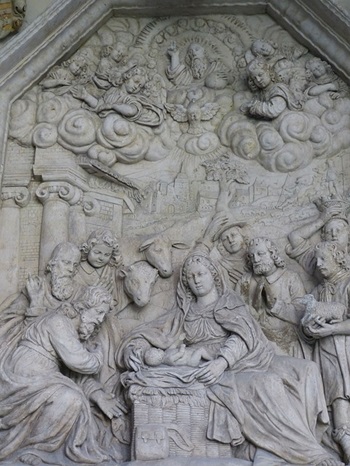
I would challenge you to find any animals in the actual nativity story of the Gospels with the exception of the “flocks” over which the shepherds are watching in the fields. We usually assume that these were flocks of sheep, but there could have been goats too. Other than that, I regret to inform you that those cleaned-up, prettified little animals that show up in manger scenes almost certainly weren’t there—with the exception, perhaps, of some ewes and newborn lambs. So when the little drummer boy says that “the ox and lamb kept time” while he played his drum for the Christ child, we can be quite sure that this is a later interpolation into the story, at least as far as the oxen are concerned.
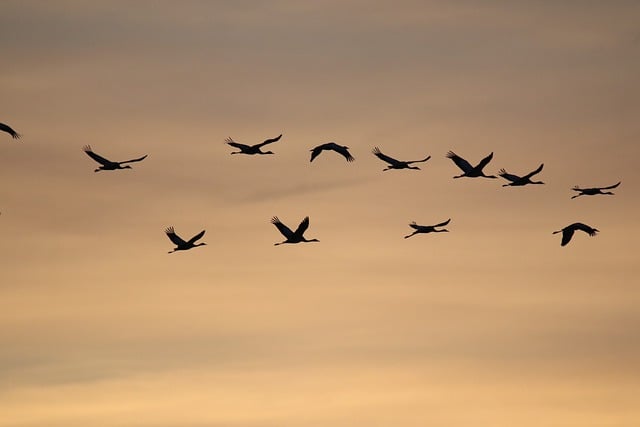
Regardless of any scriptural basis for animals in attendance, there are surprisingly many carols that include animals, and not just as window dressing. Below is a selection of carols that include birds. (My own choir, the Cherry Creek Chorale, is singing a couple of them for our December 2024 concert. Follow the link if you live in the Denver area to get your tickets!)
There’s a whole category of Christmas songs/carols that concern the bringing of gifts to the Christ child in Bethlehem. My own choir, the Cherry Creek Chorale, is singing a less-familiar one, “Son of Maria,” but more accurately “Son of the Mother” (“El Noi de la Mare“), which is also sometimes titled “Carol of the Gifts.” It is labeled as a traditional piece from Catalonia, a region of Spain that has seen its fair share of conflict over its periodic attempts to become an independent nation. I was surprised to see the number of carols (14) listed on Wikipedia as having come from this region; we are also singing the “Carol of the Birds,” which I plan to write about later on this blog. Because this is a traditional folk song, there is no “original” version. Instead, the song would have been passed down orally for generations and then finally written down, but these written lyrics vary immensely. Here’s a simple version used in a medley by the great Karl Jenkins; since it’s not being used as a stand-alone piece it needed to be fairly short. I’ll share some additional wording later in this post.
Son of Maria, Son of Maria. What shall we give to the Son of Maria? What can we give him that he will enjoy? Bunches of grapes we will give to the infant, baskets of figs for the beautiful boy.
Son of Maria. What can we give to the Son of Maria? What can we give to the beautiful boy? Olives and walnuts and raisins and honey, cherries and figs and some dates to enjoy.
Son of Maria. Tampatam tam if the figs will not ripen, what shall we do if the figs are still green? Tampatam tam when our sins are forgiven, Lovely ripe figs will at Easter be seen. Tampatam tam when our sins are forgiven, lovely ripe figs will at Easter be seen.
The sheet music says “English words by Carol Barratt after a translation from the Spanish” Barratt is Karl Jenkins’ wife and a music educator in her own right.
What started out as a beautiful but, as far as I’m concerned, a little stuffy, hymn for the Christian church feast day of Epiphany, written by the Anglican bishop Reginald Heber and published in 1811, underwent a sea change after it voyaged to America. It acquired a new tune via the shape-note tradition that was developed in the mid-1830’s and became especially popular in Appalachia. (You can read a bit about shape-note singing in my post A Rich American Tradition in “Hark! I Hear the Harps Eternal”) It also acquired a new first verse, with the original first verse becoming the refrain, at least in some versions. So I’ll start with the newly-purposed refrain:
Pieter Bruegel the Elder – Massacre of the Innocents – Google Art Project
When people first realize what the words to this carol are actually saying, they tend to be puzzled and/or outraged. I remember clearly someone in my own choir, the Cherry Creek Chorale, saying, “What on earth is going on with those kids being murdered?” Well, I can’t blame him. While I do love the song myself, it certainly can’t be said that it fits the stereotypical cheery Christmas template. The haunting melody is paired with a text that describes a horrible scenario: Herod the King commanding all young children in Bethlehem to be killed. Here are the relevant two verses that spell out the story:
O sisters too, how may we do For to preserve this day This poor youngling for whom we sing, “Bye bye, lully, lullay”?
It’s a great joy to begin introducing music that will be included in the December 2025 concert of my own beloved community choir, the Cherry Creek Chorale. If you live in the Denver area, be sure to follow the link to our website and click on the “purchase tickets” tab.
Let me start out with the correct way to punctuate the title; it should be “Hark! The Herald Angels Sing.” So the title actually comprises two sentences. “Hark!” is a one-sentence command meaning “Listen!” or “Pay attention!” (The same thing is going on grammatically in “Hark! I Hear the Harps Eternal,” which is also not typically punctuated properly.) And to whom should we pay attention? Why, the “herald angels,” of course. (Let’s spare everyone the joke about the angel’s name being “Harold,” okay?) A ”herald” is a messenger who sometimes blows a trumpet to get everyone’s attention before an announcement. The angels in the Christmas story don’t blow trumpets; they don’t even sing. They simply proclaim. So the illustration that I chose for this post is not correct biblically, but it does agree with the carol.
Well, I guess we have to take the composer at his word, since he starts out like this:
The sun is shining, the grass is green, The orange and palm trees sway; There’s never been such a day In Beverly Hills, L.A. And I am longing to be up north . .
Man, if I went through this song line by line, starting to write as I am on Nov. 1, giving all the variants both of the song itself and also its precursors, Christmas would be long gone by the time I finished. I’m sure there have been whole doctoral dissertations written on just this subject. But not everyone shares my obsession with history and etymology, so I’m going to concentrate on this version, usually sung or performed as a Christmas song even though none of the verses except for the first one refers in any direct way to the Christmas story.




 Well, I guess we have to take the composer at his word, since he starts out like this: