How Do Toys Become Real? Reflections on Barbie, Pinocchio, and the Velveteen Rabbit, with perhaps a bit of a side trail about The Lord of the Rings

Image accessed via Wikipedia.

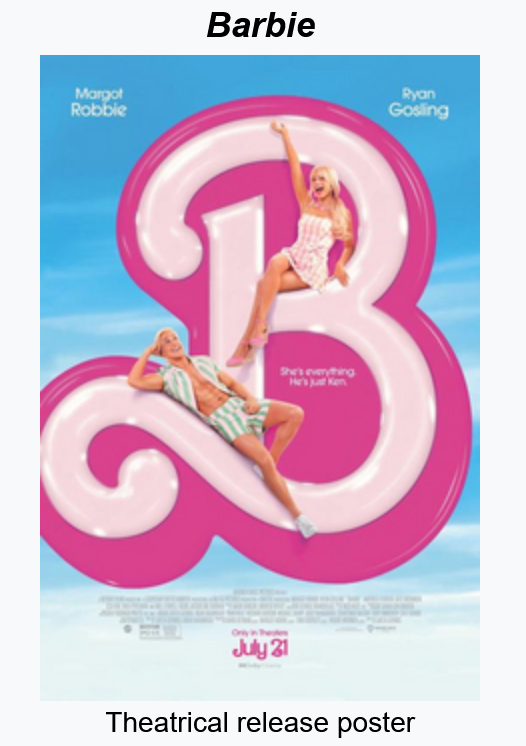
My choir, the Cherry Creek Chorale in the Denver area, performed Billie Eilish’s “What Was I Made For” from the movie Barbie in our May 2025 concert, California Dreamin’. The scene in which Barbie meets her creator, Ruth Handler (played by the great Rhea Perlman), and decides to leave Barbieland and live in the real world gets me misty-eyed every time I watch it.

(Side rant: Just because I choke up at the above scene doesn’t mean that I approve of everything in this movie, especially the portrayal of men. Honestly, folks: If there were ever to be a movie titled Ken, and women without men were to be portrayed the same way that men without women are shown in Barbie, there would be rioting in the streets—and the rioters wouldn’t be wearing pink pussy hats but Brunnhilde horned helmets, and they’d be carrying spears to boot! End of rant.)

Ho-kay. Where were we? Ah yes—Barbie’s decision to become “real.” Suddenly I realized that this is the same story as that of Pinocchio and also of the Velveteen Rabbit1, both about toys who become living creatures. Since the Chorale has sung a number from the Disney Pinocchio movie I’ve written a post about that story, which I’d encourage you to read. Pinocchio has to prove that he’s worthy of becoming a real boy by being “brave, truthful, and unselfish.” Becoming real is all upside for him once he rescues Geppetto from the whale, but it’s a different story for Barbie. Here’s the dialogue that comes right before the song, in which Barbie talks to Ruth Handler. I went to the trouble of transcribing it because I wanted to be sure that the meaning came through. I’ll post a video of the movie clip at the end of this post:

Read more

Two Views of Love in Two Musical Comedies

Picture

If my choir is performing a song from a film or play I always like to put the piece in context, which often means that I have to wade through summaries of plots that make very little sense. Many if not most musical comedies have plots that are simply frameworks, often flimsy, to hang the song-and-dance numbers on. (It’s okay for me to end that previous sentence with a proposition since one of these song titles does that, too.) Also, sometimes the musical numbers have outlived the production for which they were written and it’s very difficult to get access to the original story.

Read more

In which I get schooled on the greatness of Dave Brubeck and his “Take Five”

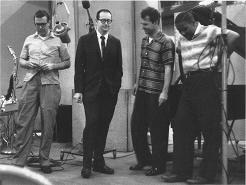
The quartet in 1959 during the Time Out sessions. From left to right: Joe Morello, Paul Desmond, Dave Brubeck, Eugene Wright. Accessed via Wikipedia. Fair use, https://en.wikipedia.org/w/index.php?curid=5988905

My brother-in-law really likes jazz, and I’ve sometimes said in his hearing that I don’t particularly care for it as it seems formless, repetitive and tuneless to me. This comment has been received about as well as you’d expect.

Ho-kay. Brubeck’s origin story is truly fascinating, so let me take at least a dip into that before moving on to the piece at hand. Brubeck did the piano-lessons-at-age-four routine, but his family moved to a 45,000-acre ranch in California when Dave was 12 and he got roped into working there. His two older brothers were on track to become professional musicians due to his mother’s influence and training; his cattleman father insisted to his wife that “’this one is mine,” referring to Dave. Thus Brubeck moved from the piano bench to the saddle, but music still fascinated him:

Read more

Streams of Meaning in Shawn Kirchner’s “Sweet Rivers”

Jordan River near Chorazin (Seetheholyland.net)

 Have to tell you that I’ve just finished doing a deep dive into the career of the composer/songwriter of “Sweet Rivers,” Shawn Kirchner, and I am exhausted. You can read his professional bio on his website1 if you’d like; just be sure you’re sitting down before you start.

Although Kirchner was classically trained, his compositions have become more and more attuned to popular music, whether folk, jazz, or bluegrass. Within those categories he’s written many sacred pieces, one of which is “Sweet Rivers,” pairing text by the itinerant preacher John Adam Granade with his own tune. Granade was an active participant in the “Great Revival in the West” that’s usually dated to 1800 and is part of the “Second Great Awakening” that swept over the Northeast and Midwest US especially, although outbreaks of religious fervor occurred all over the nation. Granade was known as “the wild man of Goose Creek” (a settlement in Tennessee) and became a prolific hymnwriter. Here’s a description of his behavior:

Read more

The Fascinating Story behind “Fascinating Rhythm”

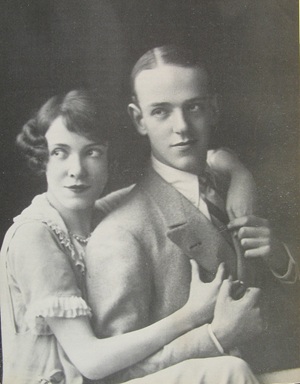
1919 publicity photo of Adele and Fred Astaire, accessed via Wikipedia.

Have you ever had the experience of paying attention to the lyrics of a familiar song and thinking, “Hmmm. This doesn’t say what I’d always thought it did”? You might take a look at my post about the song “Oh the Days of the Kerry Dancing” in which this same realization took place for me.1

Anyway, you’d think from the title of this song that it would be about how wonderful it is to be in thrall to a particular set of notes or to musical rhythm in general, but that’s not really what the words say. Here’s perhaps the clearest statement about the rhythm’s deleterious effects on the speaker:

I know that once it didn’t matter, but now you’re doing wrong;
When you start to patter, I’m so unhappy.
Won’t you take a day off?
Decide to run along somewhere far away off, and make it snappy!
Oh, how I long to be the man I used to be!
Fascinating rhythm, oh, won’t you stop picking on me?

Let me say first off that the song itself has very little to do with the plot of either the 1924 stage musical Lady, Be Good! or the 1941 film Lady Be Good in which it appears. I’m not even going to try for a plot summary of either one; suffice it to say that the song provides an excuse for a big dance number in each. In the stage version Fred Astaire and his sister Adele performed their dance midway through and then as the grand finale. In the movie the great Eleanor Powell gave an astounding tap routine.  

Read more

The Long and Winding History of “Ain’t No Grave”

Image by person678 from Pixabay

I used to get a Sunday newsletter from a journalist named David French, and he’d always include a video of a contemporary worship song. I’m not a big fan of such music as a usual thing, finding most of it syrupy and breathy. (Sorry!) But I’d usually click on the video at least briefly, and one Sunday he’d put up a performance of “Ain’t No Grave” with a singer named Molly Skaggs. Hmmm, I thought, is she related to Ricky Skaggs, the great bluegrass performer?

Oh my! She is indeed his daughter, and a worthy representative of his musical tradition. I don’t know how many times I’ve watched/listened to that video. (It’s great for getting myself going on cleaning up the kitchen.) I love the words, and the music, and Molly standing there with her acoustic guitar and belting out the song. No glamor, no glitz—just pure talent. Later I found out that the song had been covered by many, many artists—including Johnny Cash. (After I insisted that my whole family watch the video my son said he really liked the song, and when I expressed astonishment he said, “Someone made an animation sequence to go with the Johnny Cash version.” Oh.)

Read more

“Swifter than Flame”–Elaine Hagenberg Hits Another One Out of the Park and Up into the Stars

Image by carloyuen from Pixabay

This latest piece (as of June 2024) from Elaine Hagenberg perfectly embodies her style: the use of an unfamiliar and enigmatic text and dramatic, sweeping musical lines: “Swifter than Flame,” for SATB chorus with the text from a poem by Carl John Bostelmann, who wrote primarily in the 1920’s and 30’s. I don’t do musical analysis in these posts  and so will simply say that she manages harmonic sweetness that never topples over into syrupiness. There’s an edge there, a drive. My own choir, the Cherry Creek Chorale, has sung a number of her pieces and also participated in the commissioning consortium for her first major-length work, Illuminare, with Hagenberg herself participating in one of our rehearsals during concert week. Those of us who were privileged to be present that evening will never forget it.

I was very intrigued by the lyrics and wanted first of all to know more about the author, Carl John Bostelmann. He is perhaps best known as having written a behind-the-scenes look at John D. Rockefeller, Neighbor John, in cooperation with the photographer Curt E. Engelbrecht, who was allowed unusual access to the usually camera-shy Rockefeller. Bostelmann was also involved with various historical survey projects. For my purposes here, though, I’ve found that he published at least four volumes of poetry, a couple of which are available on Google Books, and that his work appeared during his lifetime in a number of poetry magazines. “Swifter than Flame,” however, doesn’t show up in any of these available sources.

Read more

Which Came First, the Symphony or the Song? (Or Is It a Spiritual?)

(Note: The Cherry Creek Chorale in the Denver area will be performing this lovely piece in its “American Songbook V” concerts on May 17 and 18, 2024. If you live in the area, make your plans to attend! Tickets may be purchased on this page or at the door.)

Haven’t you vaguely always understood that the second movement of Dvořák’s “New World” symphony was based on an American folk tune? I sure have. Turns out that, like most vague understandings, it’s not true. Dvořák wrote the tune himself; he said to one inquiring conductor that ““I tried to write only in the spirit of those national American melodies.”1 You can assign some kind of folksy charm to the horn solo in Movement #2, but it’s not necessarily American charm:

It has been said that Dvořák’s themes in his symphony were inspired by American folk melodies, especially Afro-American. But his themes are just as similar to Czech or Bohemian folk music and probably came from his own country’s music tradition.2

So all of that is well and good, but my focus in this post is on the words to the song that were written using that horn solo theme in the “Largo” movement. Such a reputable outlet as National Public Radio says that the words were written by Harry Burleigh, a Black composer whom Dvořák befriended while in New York. But they were actually written by another American protégé of Dvořák, a student of his named William Arms Fisher, who was White but who chose to write the lyrics in what he perceived to be some sort of African-American dialect. (Note my somewhat skeptical tone here.) So it’s “jes” instead of “just” and “’spectin’” rather than “expectin’” or “expecting.” And “goin’” is written as “gwine.”

As the song became more popular and mainstream, the dialect was considerably softened or omitted. In fact, although I haven’t been able to find a reproduction of the full original sheet music, I did find an image of the first page, which says at the bottom: “When desired the text may be sung without dialect.”

Here’s what Fisher himself had to say about African-American spirituals in general, in an introduction to an anthology of spirituals that he produced:

Read more

Just How Hallmark Card-y Are the Lyrics to “Somewhere Over the Rainbow”?

Image by Albrecht Fietz from Pixabay

Not at all. I don’t have space to deal with the lyrics as a whole, so let me start with the opening phrase and go on from there. The lyricist himself, a son of Jewish immigrants who had taken the name of “Yip” Harburg, had been writing as a sideline while running a successful business which tanked in 1929. He said, “The capitalists saved me in 1929, just as we were worth, oh, about a quarter of a million dollars. Bang! The whole thing blew up. I was left with a pencil and finally had to write for a living… what the Depression was for most people was for me a lifesaver!”

Read more

What’s the Deal with “Get Happy”?

PictureThis will be yet another of my long, meandering posts telling you more than you ever wanted to know! This time it’s about the song “Get Happy.”

First off, I remember seeing Judy Garland sing it in the famous clip from the 1950 movie Summer Stock. It was some kind of television retrospective on Garland and her career, and I can hear the narrator’s voice saying, “Everyone agrees that this performance was one of her very, very best.” The song, which comes at the end of the movie, also marked the end of Garland’s career at MGM. She had been struggling with drugs and depression and had been let go from the movies The Barkleys of Broadway in 1948 (and replaced with Ginger Rogers) and Annie Get Your Gun in 1949 (and replaced with Betty Hutton). It’s hard to imagine those two movies with Judy in the lead, for me anyway. I don’t think of her particularly as a dancer. She was given another chance with Summer Stock and managed to get through the filming with lots of sympathy and help from her co-stars, but MGM had had enough. Her contract was terminated “by mutual consent” after the film was finished. The final number, though, was filmed two months after the rest of the movie was completed, after Garland had lost a fair amount of weight by means of hypnosis. (That’s the story, anyway.) Observers have noted that she’s thinner in that final sequence than she is in the rest of the film.

Read more