
Table of Contents
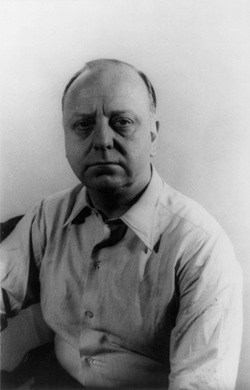
Virgil Thomson is right up there in the pantheon of 20th century composers along with Aaron Copland and Benjamin Britten, men whose works he criticized rather harshly and whose greater popularity and success he envied. Alas! Even the greatest artists can have feet of clay. But he had much in common with these other two towering figures, not the least of which was an abiding interest in the proper setting of texts to music. How he ran across the four poems of the Renaissance poet Thomas Campion is unknown; I consulted the only authoritative biography available about him and saw no fascinating backstory such as the one I discovered about Benjamin Britten’s A Ceremony of Carols. Thomson did believe, however, that Campion’s poetry and music displayed the same qualities that he strove for: simplicity and directness, with the music serving the text instead of the other way around.
Campion wrote in various genres, but in these brief lyric poems he typically shows a delicacy of feeling about his subject: an idealized woman. Campion is not writing about real flesh-and-blood females in whom he has a romantic interest but is instead presenting a concept of beauty itself. If you read these poems as descriptions of real romantic relationships you might find them a bit depressing, but the metaphysical realm is always inspiring, I guess. Here one can go haring off into Platonic love and courtly love and the whole nine yards, but I do try to keep these posts somewhat reasonable in length. I will just say that the poet is striving for a certain effect and doesn’t necessarily have any emotional skin in the game. Beyond that it’s impossible to know what was going on in his head as he wrote his poems. He never married, so perhaps he preferred the ideal to the real. As for Thomson, we know his interest in the concept of female beauty was theoretical and not personal, as his romantic pursuits were confined to men.
Following are brief analyses of the four Campion poems that Thomson chose for his settings. Depending on how the ideas are stated, I include my interpretations either interlinearly or in a separate paragraph below the poem as a whole.
Follow Your Saint
Follow your saint, follow with accents sweet;
[The woman is thought of as sacred and should be followed with sweet music.]
Haste you, sad notes, fall at her flying feet.
[She’s running away from him; he wants his music to pursue her.]
There, wrapp’d in cloud of sorrow, pity move
[As the music sadly plays, he hopes it will move her to pity for him.]
And tell the ravisher of my soul I perish for her love:
But if she scorns my never-ceasing pain,
Then burst with sighing in her sight and ne’er return again.
[If the music is unsuccessful, then it might as well expire of sadness in her presence.]
All that I sung still to her praise did tend,
[My music always praises her.]
Still she was first; still she my songs did end;
[She’s the first and last of my songs.]
Yet she my love and music both doth fly,
[In spite of my love and music she flies from me]
The music that her echo is and beauty’s sympathy.
[My music echoes her and appreciates her beauty.]
Then let my notes pursue her scornful flight:
[So let my music pursue her even though she scorns me and flees.]
It shall suffice that they were breath’d and died for her delight.
[It’s enough for me to know that my music was made for her and died for her.]
There Is A Garden In Her Face
There is a garden in her face
Where roses and white lilies grow;
A heav’nly paradise is that place
Wherein all pleasant fruits do flow.
There cherries grow which none may buy,
Till “Cherry ripe” themselves do cry.
Those cherries fairly do enclose
Of orient pearl a double row,
Which when her lovely laughter shows,
They look like rose-buds fill’d with snow;
Yet them nor peer nor prince can buy,
Till “Cherry ripe” themselves do cry.
Her eyes like angels watch them still,
Her brows like bended bows do stand,
Threat’ning with piercing frowns to kill
All that attempt with eye or hand
Those sacred cherries to come nigh,
Till “Cherry ripe” themselves do cry.
This is probably Campion’s most famous love poem, using a series of metaphors that can seem pretty weird to us moderns. Women’s faces aren’t really white and red, right? Fair skin and rosy cheeks were the standard during Campion’s time of the Renaisssance, though, and indeed for most European and British love poetry and other literature stretching back at least through the Middle Ages. But what’s all this about cherries? Why, they’re the woman’s lips, of course. And while you might think that Campion is simply echoing the tropes of the day concerning female beauty, he has a surprisingly complex nuance here with his imagery. He puts the words “Cherry ripe” in quotation marks for a reason, since they formed part of a well-known call of street vendors:
Cherry ripe, cherry ripe,
Ripe I cry,
Full and fair ones
Come and buy.
Cherry season was and still is very short, so Campion may be referencing that idea: that the woman’s youth and beauty will last for only a little while. But there’s a lot more going on here than in a conventional love poem such as “Gather Ye Rosebuds.” Did I hear anyone say “female empowerment”? Well, let’s take a look. The more I’ve thought about this brief poem the more complicated its ideas have shown themselves to be. The woman in the poem is in charge of her own destiny: No one is allowed to kiss her (as a metaphor for possession) until and unless she gives permission; that is, until she herself calls out “cherry ripe” to her lover. “My lips are now available,” she might say. She’s also not for sale to the highest bidder, whether a peer (nobleman) or a prince. She has to agree to the bargain herself. Campion was writing during a time when upper-class families usually saw marriage as a formalized legal and financial arrangement, a situation common throughout history. This idealized lady, however, is not a compliant participant.
Campion moves away from the woman’s lips to her eyes and eyebrows in the last stanza of the poem, using warlike metaphors in his descriptions. So her eyes are “angels,” but not cute little cuddly ones. They watch and guard. And her eyebrows are quite capable of shooting “piercing frowns,” just like a real English longbow. You’d better mind your manners! This lady is fierce.
Rose-Cheek’d Laura, Come
Rose-cheek’d Laura, come,
[Laura with the rosy cheeks, please grace us with your presence,]
Sing thou smoothly with thy beauty’s
Silent music, either other
Sweetly gracing.
[Please sing flowingly along with your beauty’s silent music, each of them gracing the other.]
Lovely forms do flow
From concent divinely framed;
[Those Platonic forms of idealized beauty flow out of divinely-made harmonies;]
Heav’n is music, and thy beauty’s
Birth is heavenly.
[Music comes from heaven, and so your own beauty comes from there too.]
These dull notes we sing
Discords need for helps to grace them;
[What we sing is discordant and dull, and we need your help to make them graceful;]
Only beauty purely loving
Knows no discord,
[Only beauty such as yours based on pure love has no disharmony,]
But still moves delight,
[But delight and joy are always being produced,]
Like clear springs renew’d by flowing,
[Just as a clear spring is constantly having fresh water flow into it,]
Ever perfect, ever in them-
Selves eternal.
[Beauty and music are always perfect, always eternal, with no need of outside help.]
Follow Thy Fair Sun
Follow thy fair sun, unhappy shadow;
Though thou be black as night,
And she made all of light,
Yet follow thy fair sun, unhappy shadow.
Follow her, whose light thy light depriveth;
Though here thou liv’st disgrac’d,
And she in heaven is plac’d,
Yet follow her whose light the world reviveth.
Follow those pure beams, whose beauty burneth;
That so have scorched thee,
As thou still black must be,
Till her kind beams thy black to brightness turneth.
Follow her, while yet her glory shineth;
There comes a luckless night
That will dim all her light;
And this the black unhappy shade divineth.
Follow still, since so thy fates ordained;
The sun must have his shade,
Till both at once do fade,
The sun still proud, the shadow still disdained.
The luckless lover is portrayed as a shadow and urged to keep following his ideal even though her light burns him black. If she does indeed consent to be kind to him, then her brightness will spill over onto him. But alas—even if she changes her mind and beams upon him, she’s not immortal and will eventually succumb to “luckless night.” The shade/shadow “divineth” this truth: her light won’t last forever. But he’s still caught in her thrall: his fates have ordained that he will never escape from her. Even as she dies and her light is extinguished, she will still be the proud pursued and he the disdained pursuer.
I always want to use live performance videos whenever possible, and this is the only one I could find as a stand-alone. The soprano is truly excellent. Alas, I don’t see any videos of the choral versions for these pieces:
Since my video choices are very slim, I decided to post a couple of fun songs most decidedly not by Virgil Thomson that compare a woman’s lips to edible items. Note that these don’t celebrate female independence in the same way that Campion does. (So are we going backward? Probably.}
First, from Oklahoma!, “I’m Just a Girl Who Can’t Say No,”sung by the character of Ado Annie. This is a concert performance by the great Kristin Chenoweth:
Here are the relevant lines for this post, and note that Annie seems to be putty in the hands of any man who flatters her (very unlike Laura!).
Whut you goin’ to do when a feller gets flirty
And starts to talk purty?
Whut you goin’ to do?
S’posin’ ’at he says ’at yer lips’re like cherries,
Er roses, er berries?
Whut you goin’ to do?
And–sorry not sorry–a country song that compares a girl’s lips to honey. Notice that the father is totally in control here.:
(c) Debi Simons
