
Table of Contents
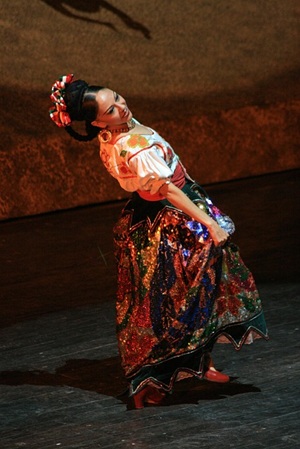
I’ve written approximately one ton about how true folk music evolves and develops over time. Let me just summarize those ideas once more as I venture into the meanings of the three Mexican folk songs my own choir, the Cherry Creek Chorale, sang in October 2025 at our “Spells, Spirits & Mariachis” concert.
So, as you probably know already, a “true” folk song cannot be traced back to an original version since it wasn’t written down at its inception. Instead, it has been passed down orally for some time and has no known author. At some point, though, there’s always an attempt to preserve songs that have become popular. The results can be quite varied, since one transcriber may get different wording from that of someone else. And a folk song or tune doesn’t have to be ancient; the familiar song “Buffalo Gals” has a panoply of variations that may date back only to the 1830’s. (“Bowery Gals,” “Philadelphia Gals,” “Round Town Gals,” and even a song to that tune that addresses “Lubly Fan,” [“Lovely Fanny”] and was performed in a minstrel show.)
But I must pull myself back here and get on to my main subject, the song suite arranged by the prolific American composer and arranger David Conte. I can’t do his career justice here, so rather than shoehorn him in I’ll link to his website1 and you can take a look if you’re so inclined. I’ll just mention as an instance of his thoroughness that he’s written three sets of arrangements for these songs, one for SATB, one for SSA, and one for TTBB. Sweet!
“La Martiniana”
The story of this lovely song could be told very simply if I were just willing to let well enough alone, but readers of this blog know that I have a penchant for rabbit hole diving. (One of my first forays into these nether regions was my search to find out how three ships could sail into Bethlehem as the old carol says, discovering that there was an even older version that referenced the three crowns or skulls of the Wise Men, said to be buried in that town.)
Here I was simply trying to figure out what the word “martiniana” means. After being told repeatedly that this word was part of the title “La Martiniana,” I finally found a reference saying that the word is a diminutive of “Martina,” a Spanish female name. Or, if you’d prefer, the suffix “iana” or “ana” can refer to a collection of items, facts, or stories related to a particular person, place, or period. So you could have “Americana” or “Victoriana” to describe a loose grouping connected to the USA or to the Victorian period. And my choir has sung selections from Randall Thompson’s song cycle using poems by Robert Frost for the lyrics, titled, of course, Frostiana. “La Martiniana” is therefore addressed to Martina, or is a song about Martina, or both. As you’ll see, it’s all a little fuzzy.
So who was this Martina or Martiniana? She was the mother of the Mexican poet Andrés Henestrosa who lived from 1906-2008. (Yes, he lived to be over 100.) As I bopped around looking for info about Henestrosa I ran across a site called FamilySearch.org2 which gave me some fascinating details about Henestrosa’s mother. She had six children, with Andrés as the second-born after an older sister, but that sister is simply described as “deceased” with no year of death. Then she had the long-lived Andrés when she was 28. In 1910 she had two children, a boy and girl, who are marked simply “deceased.” So she must have had a set of fraternal twins who died in infancy. Then she had a son 13 years later in 1923 at age 45, whose death is listed as also taking place in 1923. Then, to cap it all off, she had one more daughter with no birth or death date given, listed as simply “deceased.” I assume that this last pregnancy resulted in a miscarriage or a stillbirth. Now the intense connection displayed by Andrés to his mother begins to become clearer. He’s her only surviving child, with a string of tragedies surrounding his family. What was his mother like? Did she talk at length about her other children who had died? Impossible to know now.
I have tried to pin down a date for Henestroso’s lyrics but have been unable to do so. We do know that the tune already existed under the name “Micaela,” about another mother-child relationship. That association may have been why Henestroso used the tune for his own verses. Because “Micaela” is a true folk song, the new one with a known author’s words is often also listed as a traditional Mexican folk song. It’s nice to know who actually wrote the words, though, don’t you think, and to trace the story of the real Martina?
So what do the verses say? They echo the idea that death is not final as long as the loved one is remembered, but there’s a little bit of a twist here. Let me quote the relevant lines:
“Do not cry for me, because if you cry I will keep suffering. On the contrary, if you sing to me I will always live, I will never die.”
So it’s not just that the deceased one wants to be remembered but also to be remembered with joy. She asks for a specific song, “La Sandunga,” a traditional Oaxacan folk song that’s about . . . you guessed it: the death of a mother. It’s difficult to tease out Henestrosa’s exact meaning in his lines. We are told that he wrote his lyrics “for” his mother, which would seem to indicate that he’d be speaking to her, but that idea doesn’t make sense given the wording. He can’t be telling his mother not to weep at his grave, since he of course outlived his mother. So Martina herself must be speaking. That idea makes more sense, of course, but then who is the “niña” who is being addressed? If the poet is thinking of his mother as speaking to him and saying, “Don’t weep for me when I die,” then why isn’t “niño,” or “little male one,” used? Maybe I’m overthinking things, but my high-school literature teacher roots run deep. Nothin’ makes me happier than pontificating about the obscure wording of poetry. And since this is a set of lyrics with a known author we can’t just take refuge in the comforting thought that, after all, this is a folk song and as it got passed down it all got muddled. Henestroso meant all of this to signify something. Ah well. Or, as he would say, “Ay mamá!”
Here’s a great video of the individual song. Kinda creepy, maybe–but I like it! (You can read “La Martiniana” as performed and translated by Lily Downs by following the link3 at the bottom of this post.)
“La Bruja”
Let’s go on to a more easily-understood song. Oh, wait. It’s nothing of the kind. “La Bruja” is all about a witch and her amorous (?) adventures with the speaker in the song, presumably a man, who falls into her arms and under her spell at 2:00 in the morning when he is “flying.” I assume, with my nasty suspicious mind, that the man is drunk and gets himself into a compromising situation with someone whom he labels a witch. Some commentaries say that the witch is really an old maid or hag and that she’s desperate to find a man, any man. But for the most part she’s seen as someone with truly magical powers who can change her shape and cast spells. In this song she’s described as flying, as a spell-caster who can change the man into other forms, as a vampire-like bloodsucker, and as a mermaid.
The information about this song is universal in saying that it has unclear origins and comes from the Mexican port of Veracruz. Any port region is going to have a mixture of cultures, and this song is said to have indigenous, Spanish and African elements. It makes sense that there would be European/Spanish/Roman Catholic ideas about witchcraft in the song, as the city of Veracruz was founded in 1519 by the conquistador Hernán Cortés.
Before I venture into the tangled mass of images here, let me first address what “ay mamá” means. This expression showed up in “La Martiniana” also, as I mentioned above. It doesn’t address one’s actual mother, any more than “Oh brother!” addresses one’s actual sibling. We say “Oh dear!” or “Oh man!” without at all referring to a person. I will also point out that Italians say “Mama mia!” We will perhaps not get into the range of insults that can be made (jokingly, I hope) starting with “yo momma,” but I will just quote this from a google search that I am not making up, I swear: “One of the earliest known ‘your mother’ insults was found on a Babylonian tablet dating back to 1500 BCE.” Ay mama! Okay, I’ll stop.
Anyway, the speaker in “La Bruja” falls into the arms of a “lady,” and note that he totally removes himself from any responsibility here. This is something that happens to him, and then the lady, now identified as a witch, “takes” him to her house on a hill, again implying that the man has no agency There’s a great deal of symbolism attached to hills or mountains; here it at least signifies an isolated place where the witch can have her way with the man. And what does she actually do? Well, she turns him into a flowerpot (“maceta”), a pumpkin (“calabaza”), and a gourd (“calabacito”). The one quality that all three of these items have in common is that they’re hollow, a meaning that fits into the man’s question about how many little ones the witch has sucked on. Witches were sometimes accused of sucking the blood out of babies or children while they slept; here the witch says she just wants to suck the man, leaving him as empty as the vessels mentioned. The vampiric as well as the erotic imagery is pretty clear.
But then, in a stunning twist of fate, the witch turns into a mermaid: “the upper part was a woman and the bottom was a fish.” She has become a sea witch, yet another common image in this whole ball of wax. And since Veracruz is a port city the sea was ever present, as a source of danger as well as travel and commerce. That’s pretty much the best I can do with this sudden mermaid intrusion. Not all versions of the song include this idea, by the way. Some warn children of a witch being under the bed. But Conte didn’t include those verses, so I won’t either. You can read about them below in the footnoted source,4 though, if you just can’t get enough of all this witchy imagery.
Here are a couple of video; first, a very traditional one in which the women are wearing lighted candles on their heads:
And just for fun, because I like the name of the group (and the performance, especially that of the eponymous Jenny–but everyone is having a whale of a time, or perhaps a mermaid of a time?):
And now we go on to the shortest of the three arrangements, but, as is fitting, probably the most complex:
“La Llorona”
After wading through quite a few versions of and theories about La Llorona (The Weeping Woman), I now understand why Conte chose to use just two verses for his arrangement. I feel free to pick and choose among all of this material about the song as a whole, selecting what interests me the most. Here goes:
La Llorona as a betrayed wife or lover
I was totally struck by how much this version matches that of Medea, wife of Jason of the Argonauts and the Golden Fleece, who kills her own children she’s had with him after he marries another woman. In some versions of the story Medea also kills Jason’s new bride with a poisoned cloak. La Llorona drowns the children she’s had with a handsome man who came to her village and took her as his wife but then decided she wasn’t high class enough for him. He is usually depicted as marrying another woman; La Llorona regrets her murders and so wanders along the river where she drowned them, weeping and wailing. She’s usually said to be unable to drown herself and instead doomed to walk the earth as a sorrowful and/or vengeful spirit. Children are warned to stay away from the river at night or she might decide to drown them. This is a vastly simplified telling of both the Medea and La Llorona stories. But you know what? This story also somewhat echoes that of Madame Butterfly, the story of the young Japanese girl who is foolish enough to marry an American naval officer named (absurdly, in my view) Pinkerton. To him she’s just a sexual convenience, a geisha girl. But she thinks that he’s serious about their marriage. When Pinkerton returns to Japan after a long absence with his American wife Kate, Butterfly kills not their son but herself.
La Llorona as a three-fold symbol of indigenous culture, La Malinche, and/or The Virgin of Guadalupe
If nothing else, my attempts to understand the complex ideas in this song have shown me how fascinating Mexican culture truly is. La Llorona may be an echo of an ancient Aztec goddess Cihuacoatl who was associated with children and sometimes with their deaths. She’s a very complicated figure, with various and sometimes conflicting stories told about her. Then there’s Coatlicue, another Aztec female deity who is seen as a “sin eater” and was sometimes called “Our Lady Mother,” who then got conflated with the Virgin Mary, especially Our Lady of Guadalupe, who miraculously appeared to an Aztec man in 1531 after the Spanish had arrived and directed him to ask that a shrine be built in her honor. All of the sources about the miraculous appearance are disputed, but there’s no denying that a huge cathedral to Our Lady of Guadalupe was built in Mexico City starting in 1695. Today there’s an enormous complex of buildings on the site, including the Old Basilica already mentioned and the new one built in the 1970’s, along with chapels and cloisters as well as a museum and research facilities. It’s amazing. I’ll include a picture down below.5
The actual historical figure of La Malinche somewhat echoes the La Llorona story in that it’s all tied up with a woman having a romantic relationship with a man who’s out of her class/ethnicity. Malinche was an indigenous girl who was sold into slavery at a young age and ended up as the translator and also consort/concubine/lover of Hernán Cortés the conquistador. There’s a lot of ambivalence about this personage in Mexican culture:
One interesting outgrowth of this merging of Native and Spanish elements is a strong contemporary tradition [that] equates La Llorona with La Malinche, the Native woman whose language skills were instrumental in Hernán Cortés’s conquest of Mexico. Since La Malinche’s children with Cortés were among the first people to have both Spanish and Native ancestry, they are considered foundational to Mexican identity, yet for her role in the conquest, La Malinche is often considered a traitor.6
All of which leads to the third strand of symbolism connected to La Llorona:
La Llorona as a symbol of Mexico and the tragedies of colonialism
She weeps because her children are literally dead, taken from her (so to speak) by the perfidy of a man who betrayed her. She is Mexico, weeping over all of the horrors and injustices of the Spanish conquest. I think that this final bit of symbolism is the main reason for her persistence in Mexican culture.
With all of that being said, let’s now take a look at the song as opposed to the legend. The lyrics can be maddeningly obscure, and there seem to be any number of verses.7 It’s not clear (to me at least) who is actually speaking, but it’s not the Weeping Woman herself. There are reference to the Virgin Mary (whom La Llorona resembles because of her beautiful gown which is also a traditional indigenous garment called a huipil). The speaker may or may not be Llorona‘s now-repentant former lover. So you can interpret the words any way you choose. I picked a video that I thought preserved the air of total mystery in the song. Be sure to watch until the very end!
But I couldn’t resist also including this short clip from the movie Coco that includes at least part of the song, which reappears later on. If you want to see the reprise, and you also wonder what is in Imelda’s hand that the guy in the big sombrero wants to get away from her, well, I guess you’re going to have to watch the whole thing. (It’s great!)
- David Conte – Composer ↩︎
- Andres Henestrosa ↩︎
- “La Martiniana” ↩︎
- “La Bruja“–Mexican Children’s Songs ↩︎
- https://debisimons.com/wp-content/uploads/2025/09/Our-Lady-of-Guadalope.jpg ↩︎
- “La Llorona: Roots, Branches, and the Missing Link from Spain” ↩︎
- An incredible number of verses for “La Llorona” from Wikipedia ↩︎
The verses and translations for the specific arrangements by David Conte are not available for me to copy and paste from the sheet music, so you’ll have to access the above material instead.
(c) Debi Simons
