

So, to begin, let me just say, once again, with feeling, that the Magi did not show up on Christmas night with the shepherds. The Gospel of Matthew 2:11 says, “On coming to the house, they saw the child with his mother Mary, and they bowed down and worshiped him.” At this point it makes sense to think that it’s been at least a year since the Magi set out from their home. I know that those colorfully-bedecked camels (which are never mentioned in the biblical narrative) add quite a splash to the manger scenes we set up every year, but they weren’t there.
 Note the nicety of the double question mark, please!
 I’ve written quite a bit about Hanukkah in previous posts, specifically about the significance of
 I remember back in elementary school being teased a bit by some Jewish classmates about the superiority of Hanukkah over Christmas: “You only have one day to get presents, but we have eight.” I’m sure I wasn’t quick-witted enough to mention the plethora of gift-giving in “The Twelve Days of Christmas” with its extra days of celebration. So here’s the information I didn’t have back then.
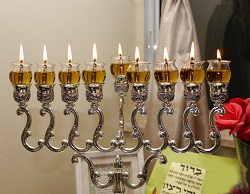 First question: Why is the pictured lamp stand more authentic and correct as a part of the Hanukkah celebration than the usual candelabra?

