
Podcast: Play in new window | Download
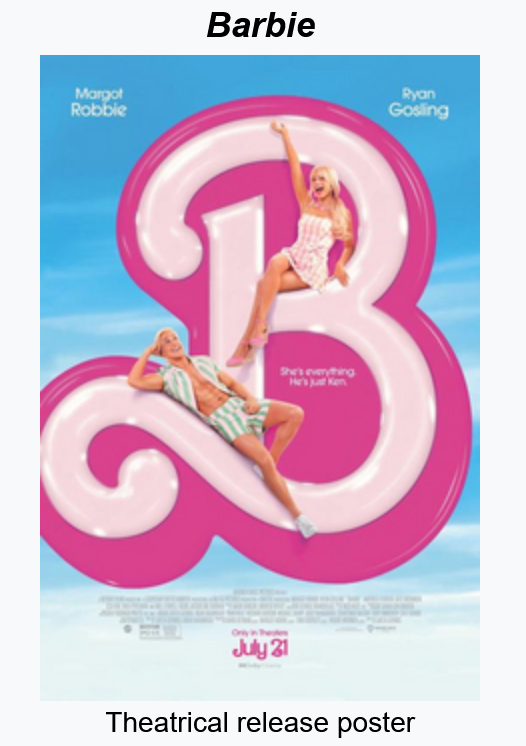
My choir, the Cherry Creek Chorale in the Denver area, performed Billie Eilish’s “What Was I Made For” from the movie Barbie in our May 2025 concert, California Dreamin’. The scene in which Barbie meets her creator, Ruth Handler (played by the great Rhea Perlman), and decides to leave Barbieland and live in the real world gets me misty-eyed every time I watch it.
(Side rant: Just because I choke up at the above scene doesn’t mean that I approve of everything in this movie, especially the portrayal of men. Honestly, folks: If there were ever to be a movie titled Ken, and women without men were to be portrayed the same way that men without women are shown in Barbie, there would be rioting in the streets—and the rioters wouldn’t be wearing pink pussy hats but Brunnhilde horned helmets, and they’d be carrying spears to boot! End of rant.)
Ho-kay. Where were we? Ah yes—Barbie’s decision to become “real.” Suddenly I realized that this is the same story as that of Pinocchio and also of the Velveteen Rabbit1, both about toys who become living creatures. Since the Chorale has sung a number from the Disney Pinocchio movie I’ve written a post about that story, which I’d encourage you to read. Pinocchio has to prove that he’s worthy of becoming a real boy by being “brave, truthful, and unselfish.” Becoming real is all upside for him once he rescues Geppetto from the whale, but it’s a different story for Barbie. Here’s the dialogue that comes right before the song, in which Barbie talks to Ruth Handler. I went to the trouble of transcribing it because I wanted to be sure that the meaning came through. I’ll post a video of the movie clip at the end of this post:
Ruth: You understand that humans only have one ending. Ideas live forever. Humans, not so much. You know that, right?
Barbie: I do.
Ruth: Being a human can be pretty uncomfortable.
Barbie: I know.
Ruth: Humans make things up, like patriarchy, and Barbie. Just to deal with how uncomfortable it is.
Barbie: I understand that.
Ruth: And then you die!
Barbie: Yeah. Yeah. (laughs) I wanna be a part of the people that make meaning—not the thing that’s made. I wanna do the imagining—I don’t wanna be the idea. Does that make sense?
Ruth: I always knew that Barbie would surprise me, but I never expected this!
Barbie: Do you give me permission to become human?
Ruth: You don’t need my permission!
Barbie: But you’re the Creator. You . . . don’t you control me?
Ruth: I can’t control you, any more than I could control my own daughter. I named you after her—“Barbara.” And I always hoped for you, like I hoped for her. We mothers stand still so our daughters can look back to see how far they’ve come.
Barbie: So being human’s not something I need to ask for, or even want? I can just . . . it’s just something I discover I am?
Ruth: I can’t in good conscience let you take this leap without knowing what it means. Take my hands. Now close your eyes. Now feel.
(Song begins, montage of old videos begins. Barbie is left alone at the end of the song.)
Barbie: Yes.
Scene fades to a street scene in LA; Helen Mirren’s voice comes on as narrator:
So Barbie left behind the pastels and plastics of Barbieland for the pastels and plastics of Los Angeles.
Last line of the film, as everyone knows: Barbie goes into an office building, gives her name as “Barbara Handler” to the receptionist, and when asked why she’s there, says,
I’m here to see my gynecologist.
(Some people have professed to be puzzled about the meaning of this line. I give up!)
I was pleased to read that Greta Gerwig, who directed the film, also did the writing, along with her husband Noah Baumbach. She’s one of my favorite filmmakers because she managed to make a version of Little Women that stayed absolutely true to the original and yet included updated feminist ideas. (I am very protective of Little Women.)
Eilish’s song, written with her brother Finneas O’Connell, is perfectly integrated into the ideas in the film. Here’s what she said in an interview:
Eilish said the pair wrote the opening lines “in the first 10 minutes” of crafting the song, with inspiration from their own experience to accompany the journey of self-discovery Margot Robbie’s Barbie embarks on in the movie.
“We wrote most of the song without thinking about ourselves and our own lives, but thinking about this character we were inspired by,” Eilish said. “A couple of days went by, and I realized it was about me. It’s everything I feel. And it’s not just me — everyone feels like that, eventually.”2
And what about that Lord of the Rings reference? Well, you’ll remember, I’m sure, that there’s a sequence in the film (but not, I believe, in the book) showing Arwen, the elf woman who marries Aragorn, weeping over his dead body in a flash-forward scene. Because she’s an elf she’ll live much longer than the human Aragorn, but she chooses to marry him anyway even though she knows that she’ll be left alone after his death. It’s not a matter of her becoming “real,” of course, but it’s a matter of making the choice to experience love even if it also includes loss.
Well, I’d better stop before I wear you out completely with all of this existential angst. Following is a selection of videos for your viewing pleasure. I’ve included the full lyrics of the Eilish song below them. Enjoy! Or not, depending on your tastes.
First, the conversation between Barbie and her creator:
I wanted to show the last scene in which Barbie goes in to see the gynecologist for the first time, but that video is no longer publicly available on YouTube. Alas!
Then a performance of the lovely arrangement that the sopranos and altos of the Chorale sang in May 2025:
Then, just because, here’s the relevant sequence from LOTR, although you don’t have to watch past about 9:00 to see the action I referenced:
And here are the full lyrics to the song:
I used to float, now I just fall down
I used to know but I’m not sure now
What I was made for
What was I made for?
Takin’ a drive, I was an ideal
Looked so alive, turns out I’m not real
Just something you paid for
What was I made for?
‘Cause I, I
I don’t know how to feel
But I wanna try
I don’t know how to feel
But someday, I might
Someday, I might
When did it end? All the enjoyment
I’m sad again, don’t tell my boyfriend
It’s not what he’s made for
What was I made for?
‘Cause I, ’cause I
I don’t know how to feel
But I wanna try
I don’t know how to feel
But someday I might
Someday I might
Think I forgot how to be happy
Something I’m not, but something I can be
Something I wait for
Something I’m made for
Something I’m made for
Source: LyricFind
A little PS here, which I couldn’t figure out how to squiggle into the main text: I vividly remember seeing an undressed Barbie doll for the first time. My mother would never, ever have bought me such a thing, and we didn’t have the money anyway. But one day I was playing with a little girl across the street and she had a Barbie doll which she was busily dressing and undressing. I was so puzzled! What on earth were those weird pointy things on her chest? And why were her feet so strange?
(c) Debi Simons
- You can read the entire story by following this link, and I’d encourage you to do so: “The Velveteen Rabbit, or How Toys Become Real” ↩︎
- “Billie Eilish says she ‘couldn’t have been less inspired’ creatively before writing Barbie song” ↩︎
